

Table of content
Myths about building remote teams still shape how many companies think about remote work today. Even as more businesses move toward distributed models, these assumptions continue to create hesitation around productivity, communication, and team collaboration.
Remote work, however, has evolved far beyond these concerns. It has become a practical and proven way for companies to hire better talent, stay flexible, and scale without being limited by location. Still, outdated beliefs often get in the way of making the most of it.
For example, one of the most common assumptions is that people are less productive when they work remotely. But the data tells a different story. A well-known study by Stanford economist Nicholas Bloom found that remote workers were about 13% more productive than their in-office counterparts.
This gap between perception and reality is exactly where most businesses get stuck. They hesitate to invest in building remote teams because of concerns around communication, accountability, or collaboration. In most cases, these concerns come from how remote work used to be managed, not how it works today.
The truth is, remote teams can perform just as well, if not better, when they are set up with the right tools, expectations, and processes. In this blog , we’ll walk through some of the most common myths around building remote teams and break them down with practical insights you can actually use.
Why More Companies Are Building Remote Teams Today
Before we get into the common myths, it helps to understand why remote work has grown so quickly in the first place. This shift didn’t happen overnight. It’s been driven by a mix of changing workforce expectations, better technology, and real business advantages.
Remote work is no longer limited to a few roles or industries. A growing percentage of the global workforce now works remotely at least part of the time, and that number continues to rise as companies become more comfortable with distributed teams.
Developers, in particular, have shown a strong preference for flexibility. According to the Stack Overflow Developer Survey, a noticeable share of developers actively prioritize remote work when evaluating opportunities. This signals a broader trend where flexibility is becoming just as important as compensation or company culture.
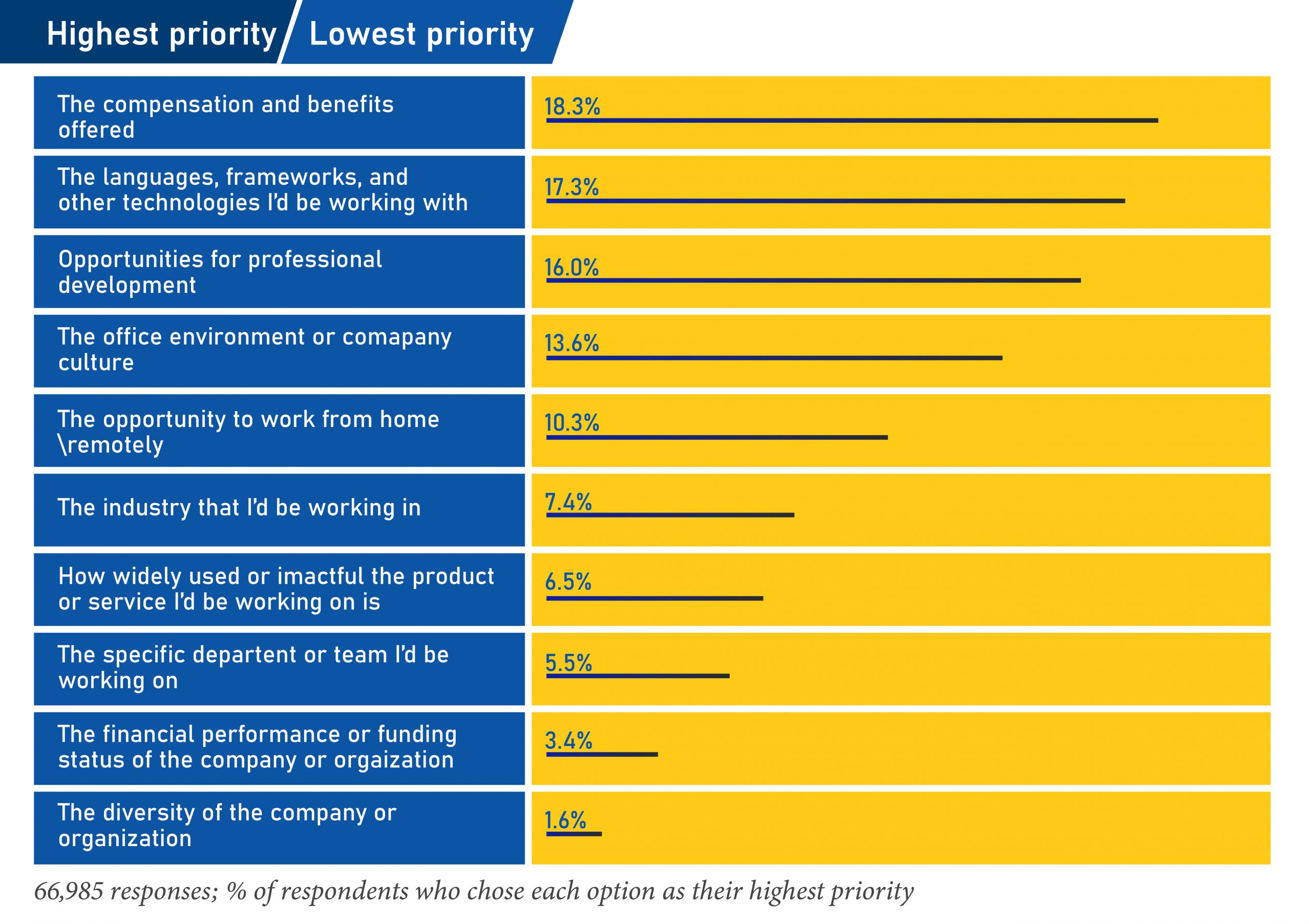
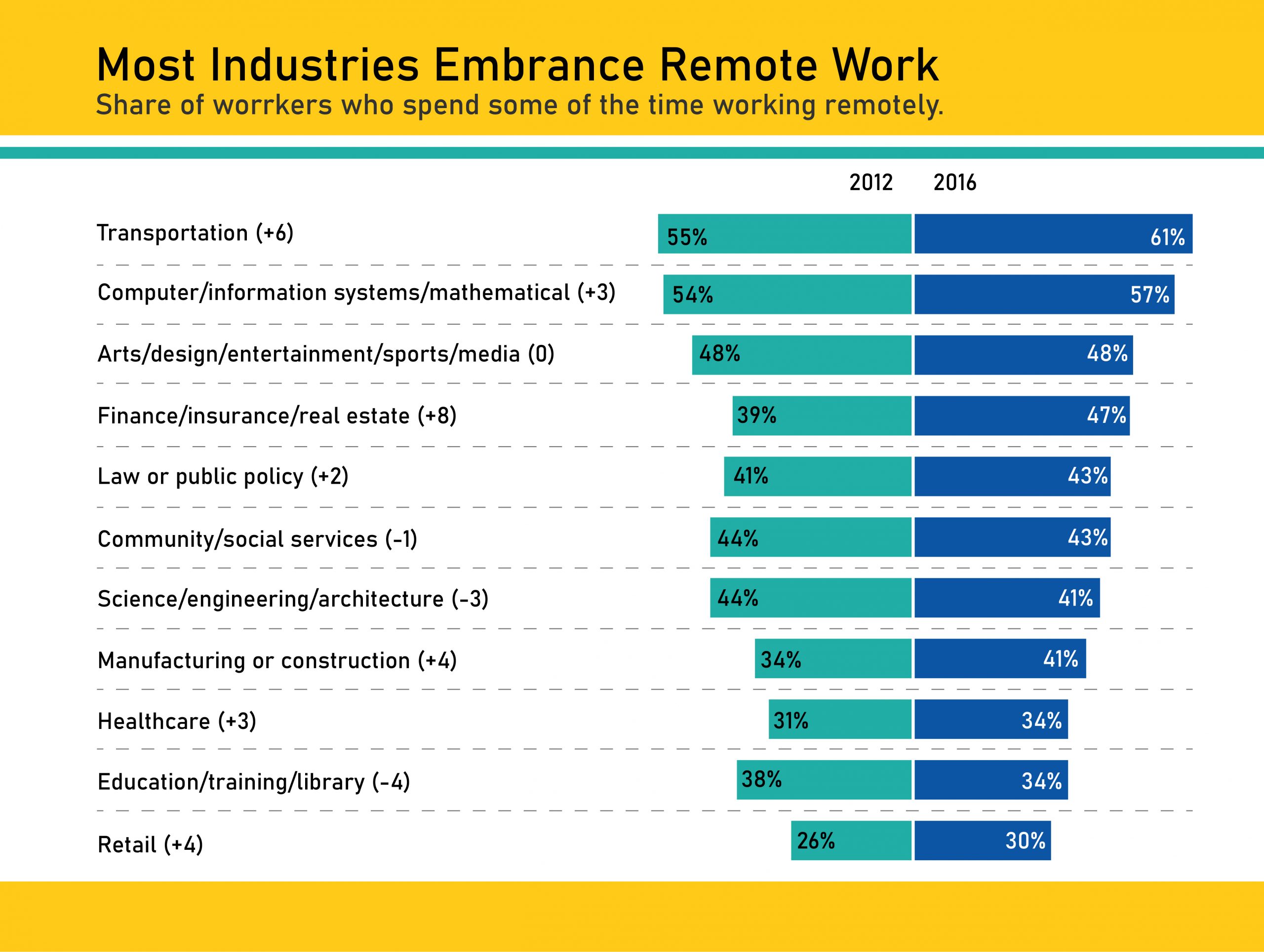
At the same time, remote work adoption is spreading across industries. What started with tech and digital roles has now expanded into finance, education, healthcare, and more. The data below reflects how different sectors are increasingly embracing remote work as part of their operating model.
Many companies are adopting remote working because of the available flexibility and mobility. This ease of working is the major responsible factor that attracts talented individuals who seek something different from any typical office job.
But there are multiple myths about remote work, so to help you set the foundation for how it can actually look like, we decided to debunk common myths about building remote teams to work.
Common Myth About Building Remote Teams
Myth #1- Building Remote Teams Means Decreased Productivity

It is common thinking that anyone working remotely is more distracted because they don’t have anyone to push them to work or keep tabs on their progress and make them finish the task by the clock. But, now debunk common myths based on a study by Harvard Business Review proves, on the contrary, some companies notice the employees productivity increases by 13.5% after allowing remote working.
Likewise, the Stanford Study also found remote working facilities lead to a 13% increase in employee performance and going more result-oriented. However, the fact is, healthy remote companies or building remote teams solely rely on trust between the employee and the employer. Along with a supportive remote working environment.
Based on Supersourcing remote working experience, we ensure to get in contact through Slack, Google Meets, and Basecamp. We tried to minimize the distance or let people be left alone while maintaining the virtual communications. We believe that trusting and giving an optimal work environment will allow even an ordinary employee to propose an idea that can shape the company’s future. That’s why we have rapidly grown our remote working team and deliver productive and quality work every day.
Myth #2- Remote Teams Suffer Poor Communication

Communication is one of the major factors that make employees think twice about remote working. It is also one of the common myths about building remote teams. Apart from that, remote working employees might also feel lonely at their homes and result in peer disconnection.
Without communication, it becomes challenging to carry out work remotely. To carry out work smoothly, it requires a certain set of tools and rules to follow. Let’s debunk common myths about building remote teams by implementing proper strategies and thorough planning.
Without a doubt, it is easy to make your people feel left out due to a lack of communication with other employees. Therefore, to avoid this situation in Supersourcing, we use Slack, and Google Meet for verbal communication. Apart from that, there are various tools that you can use to connect and communicate frequently with your team members;
- TeamSpeak– central communication hub and voice communication
- Slack– central communication and written and verbal communication
- Trello & Jira– for Agile Project Management
- Basecamp– for assigning task and deadlines
- Google Meet, Skype, Zoom, Hangout– for video conferencing with clients and team
- Git– for a flexible source control system
- GitHub, Stash– for code reviews
Myth #3- No Work-Life Balance- Remote Work is for 24/7

Remote work is for 24/7- one of the most common myths about building remote teams among one and all that needs to be debunked while working remotely. Just because an employee does not physically arrive and leave the office premises each day does not mean that their work stretches continuously endlessly. Due to this misconception, many people prefer not to work remotely.
In contrast to that, building remote teams is a good option along, as it builds trust among employees and management. People who work with remote teams work similar hours to everyone else. Thus, they don’t have to put extra effort or time to prove that they are getting things done.
Remote working requires discipline and planning to organize daily working schedules of office and home to carry out and balance both places together while being at home only. Apart from that, Remote working is like a luxury for working parents to watch their children grow and witness their every small and big achievement personally.
Myth #4- Home Offices are not a Healthy Work Space

Home Offices will only be an unhealthy workspace if you don’t organize things in your way. Firstly, require a separate room and workstation to make remote working a healthy workspace. It will help you have a mind-frame to do official work while being at your home and do things without disturbance.
Let me mention a few points how our colleagues try to set their home office and depict a healthy workspace.
- good lighting,
- comfortable chair and desk (workstation), and
- separation from outside work distractions.
Organizing your workspace the way you want it will be a great perk that pays off in the long run. When working remotely, it’s worth it to take care of the necessary equipment and tools. An additional monitor, headphones, and the most important — access to a good Internet connection.
Myth #5- Building Remote Teams Limits Training Opportunities

Well, it is quite a logical concern, especially for the new joiners and the freshers in the industry. Because, if employees are not physically present in the office then it would be difficult to train them. Apart from that, if the employee is not regularly trained then their performance might suffer. This ultimately affects the growth of the company as well.
These concerns are quite genuine and require proper attention for any company while building remote teams. Once again, technology comes to the rescue. It is quite easy and very cost-effective to train team members digitally. Online courses, written documents, video chats, screen shares, and similar means are popular educational tools.
Apart from that, personal assistance and training can also be provided through video teaching. It becomes possible with the availability of various group calling applications that support smartphone and desktop users. Once a lesson has been taught and recorded, it can then be shared with future remote employees. It saves companies time and resources.
Myth #6- Data is Unsafe in Remote Working

Many companies and even small agencies worry about transferring data and information to computers outside the organization. Sharing details at unsecure servers also leads to a breach of confidentiality. Well, debunk common myths, and this is another myth that hampers remote teams working and demotivates organizations at the initial level too.
There are a number of secured tools and sources that can be used by IT agencies everywhere while building remote teams. Putting employees at cloud-based applications means the security is outsourced to that respective software program. The IT teams can handle and manage version controls without requiring access to an employee’s physical machine.
However, many organizations consider this working method could result in stealing information while working regardless of their work location. Well, it is mainly an issue with remote employees or people problems, not the location or remote working problems.
Our Supersourcing team is maximally working remotely; we as a team debunk this common myth that data is unsafe. We are using different tools to communicate and deliver work progress. However, all our work and data are safe and secure while working with remote teams.
Myth #7- Remote Working Hampers Learning from Co-Workers

Learning is important for every employee’s individual and overall an organization’s growth. But somehow, in remote working, this learning gets affected. But it can also be overcome with proper planning and strict implementation.
So, we at Supersourcing consider it also a myth because learning is a continuous process, and people can easily find different learning sources. It can be from co-workers or through the internet or getting virtually connected with them. This allows effective communication and allows to easily complete the project along with client’s satisfaction.
We conduct R&D and get the whole team connected once in a month regularly, so people don’t feel lonely or neglected. Here, they learn some common valuable things to enhance their skills. Apart from that, ensure to be connected multiple times in a month. Share their learnings with each other and deliver the best solution considering clients requirements.
The Truth About Building Remote Teams or Remote Working
After explaining the points mentioned above to debunk common myths about building remote teams- represents remote working is quite a wonderful arrangement. Building remote teams enhances flexibility and is the best working option for a great number of people and the businesses they are employed by.
However, studies show that those who regularly work remotely or outside the company offices are generally more productive. A good contributor in the team, and are more happier and satisfied with their work than their colleagues.
First, start working remotely with appropriate technologies, strategies and tools. Implementing it appropriately will definitely make your current lifestyle possible. Without the right tech tools, you wouldn’t be able to stay in touch with your team from the comfort of your own home office or local coffee shop.
Supersourcing is a IT staffing company that helps agencies to scale their business by hiring remote developers that match their requirements. We promote remote working and help agencies to get projects and deliver the best services to clients while using tools and techs appropriately. The proper use of tools makes this possible for all the registered agencies and clients.
Apart from that, our Supersourcing team is supporting these agencies to debunk common myths about building remote teams and be what you are and do good in your expertise domain.
