

The $5.1M S/4HANA Migration That Stalled
Enterprise SAP transformations are no longer optional; they are deadline-driven, high-stakes programs tied directly to financial reporting, compliance, and business continuity. By 2027, SAP will end mainstream maintenance for ECC, forcing thousands of enterprises to accelerate their S/4HANA migration timelines.
In fact, Gartner forecasts that worldwide IT spending will reach $6.15 trillion in 2026, with a significant share allocated to cloud ERP and transformation programs like S/4HANA.
Amid this urgency, hiring SAP S/4HANA engineers has become one of the most critical decisions for enterprise buyers especially when leveraging India-based teams for cost efficiency and scale. But as many organizations have discovered, not all SAP experience translates to S/4HANA expertise.
The gap between ECC familiarity and real S/4HANA implementation capability is where multimillion-dollar programs stall. This guide breaks down how to avoid that risk and hire the right S/4HANA talent in 2026.
TL;DR 8 Answers Before You Read Further
| Question | Answer |
| What does a Senior SAP S/4HANA Consultant cost from India? | $55–85/hr fully loaded. An S/4HANA Solution Architect runs $100–145/hr. Section 5 has the full rate stack. |
| What's the single most important thing to verify? | S/4HANA version on the last production project. S/4HANA 1809, 1909, 2020, 2021, 2022, and 2023 have different feature sets. ECC experience is not S/4HANA experience. |
| Which Indian city has the deepest S/4HANA talent? | Pune for SAP FI/CO and manufacturing modules. Bangalore for RISE with SAP and cloud deployments. Hyderabad for SAP technical (ABAP, BTP, integration). |
| What certification actually matters? | SAP Certified Application Associate SAP S/4HANA for the relevant module. Not the legacy SAP ECC certifications. The word "S/4HANA" must appear in the certification name. |
| What's the most commonly misrepresented credential? | SAP ECC certifications presented as S/4HANA capability. And older S/4HANA version certifications (1809, 1909) presented as current S/4HANA 2022/2023 experience. |
| Greenfield vs brownfield does it matter for hiring? | Enormously. Greenfield S/4HANA requires Universal Journal architecture knowledge from scratch. Brownfield requires ECC-to-S/4HANA conversion experience and simplification item knowledge. They require different skills. Specify which in your JD. |
| What's typical attrition for SAP consultants in India? | 12–15% for S/4HANA specialists. Below the 22% IT average. SAP is a long-cycle skill consultants who invest in S/4HANA certification stay in the ecosystem. |
| RISE with SAP how many India consultants actually know it? | Approximately 2,400 consultants in India have RISE with SAP deployment experience. Most S/4HANA experience in India is on-premise. RISE cloud deployment is a distinct skill set. |
Are You Actually Ready for This?
SAP S/4HANA programs are among the most complex enterprise technology programs in existence. The failure rate for offshore-heavy SAP programs is high and buyer readiness is the primary driver. Score yourself before engaging any vendor.
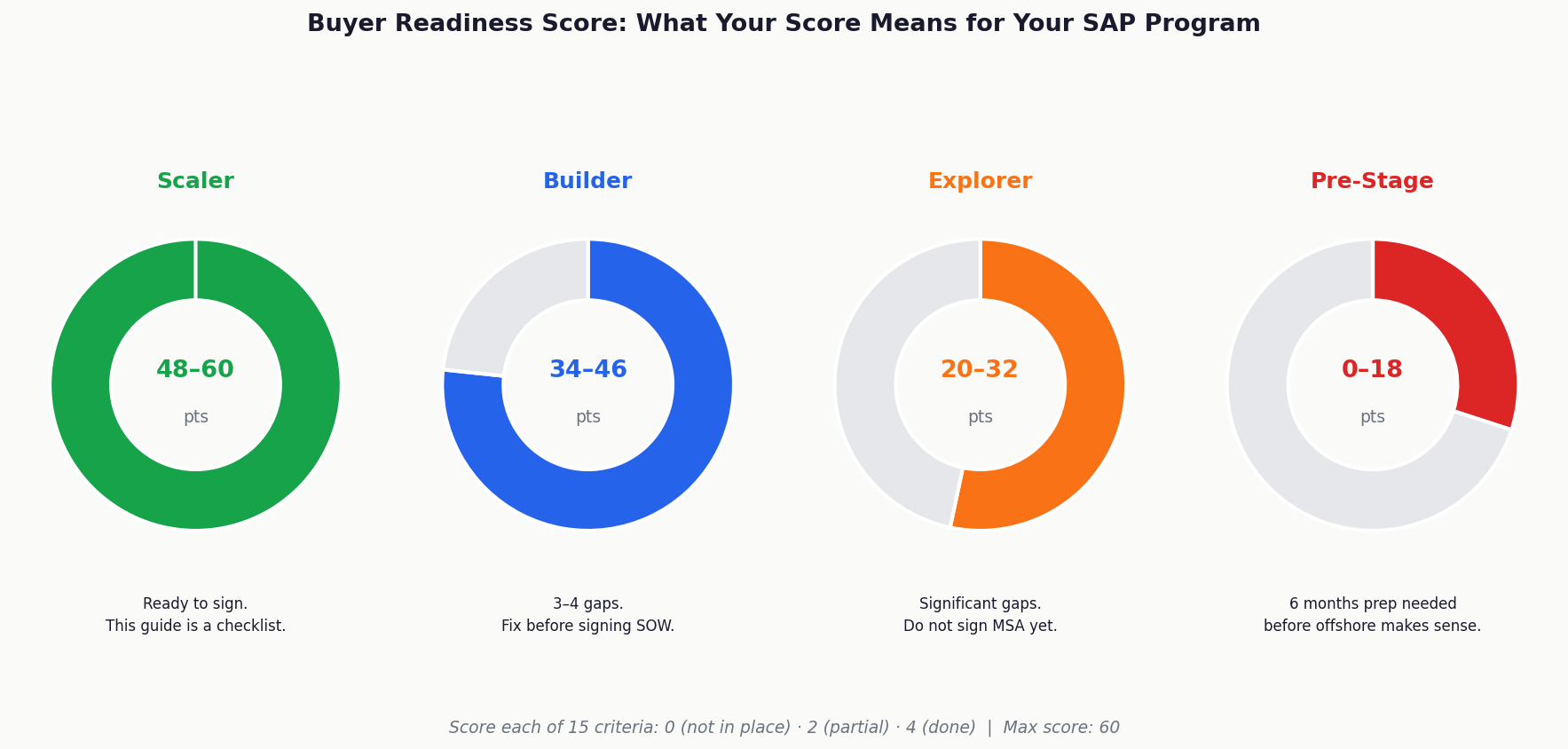
Score each: 0 (not in place), 2 (partially), 4 (done).
| # | Criterion | Score |
| 1 | Named SAP program owner with SAP domain knowledge. Not just a project manager. | 0/2/4 |
| 2 | Greenfield vs brownfield vs selective data migration decision made | 0/2/4 |
| 3 | S/4HANA version and deployment model confirmed on-premise, private cloud, RISE with SAP | 0/2/4 |
| 4 | Module scope defined FI/CO, MM, SD, PP, WM/EWM, HR, specific to your program | 0/2/4 |
| 5 | Business process ownership confirmed which business unit owns each module scope | 0/2/4 |
| 6 | Data migration strategy defined what migrates, what cutover approach | 0/2/4 |
| 7 | SAP BASIS and technical architecture ownership confirmed | 0/2/4 |
| 8 | Interview panel with S/4HANA domain experience available within 5 business days | 0/2/4 |
| 9 | Legal SLA under 15 days for MSA review | 0/2/4 |
| 10 | System landscape documented DEV/QAS/PRD and transport management | 0/2/4 |
| 11 | KPIs defined: configuration completion rate, integration test pass rate, data migration accuracy | 0/2/4 |
| 12 | CISO signed off on offshore access to SAP landscape and business data | 0/2/4 |
| 13 | Escalation path: vendor PM → your SAP Program Director → your CIO/COO | 0/2/4 |
| 14 | IP ownership for custom ABAP, BTP extensions, and configuration documentation in MSA | 0/2/4 |
| 15 | Finance can process USD-denominated invoices within 30 days | 0/2/4 |
What your score means:
| Score | Tier | Reality Check |
| 48–60 | Scaler | Ready. This guide is a checklist. |
| 34–46 | Builder | 3–4 gaps. In SAP, they cost you the first 90 days. Fix before signing. |
| 20–32 | Explorer | Significant program definition work needed. Do not sign an MSA yet. |
| 0–18 | Pre-Stage | SAP programs require 6 months of internal preparation before offshore delivery makes sense. |
From the deal floor: A UK-based retailer £2.1B revenue, SAP ECC scored 14 on this checklist. Their CIO signed a 14-person S/4HANA SOW anyway. The greenfield vs brownfield decision (criterion 2) had not been made. The offshore team spent the first 14 weeks in discovery, re-scoping, and management escalation as the decision was debated. Fourteen weeks at £80/hr blended across 14 consultants: £627K spent on a decision that should have been made before the SOW was signed. The score predicted this outcome with mathematical precision.
The SAP S/4HANA Talent Market in India 2026
India is the largest SAP talent market outside Germany. TCS, Infosys, Wipro, HCL, Capgemini, and Accenture have combined SAP practices employing over 200,000 SAP-experienced professionals in India. The country has delivered more SAP implementations globally than any other single source of delivery capacity.
The complexity: SAP is a 30-year-old ecosystem. India’s SAP talent pool contains experience across SAP R/3, ECC 5.0, ECC 6.0, and now S/4HANA four generations of a platform that has fundamentally changed with each generation. “SAP experience” covers more ground and more outdated ground than almost any other enterprise stack.
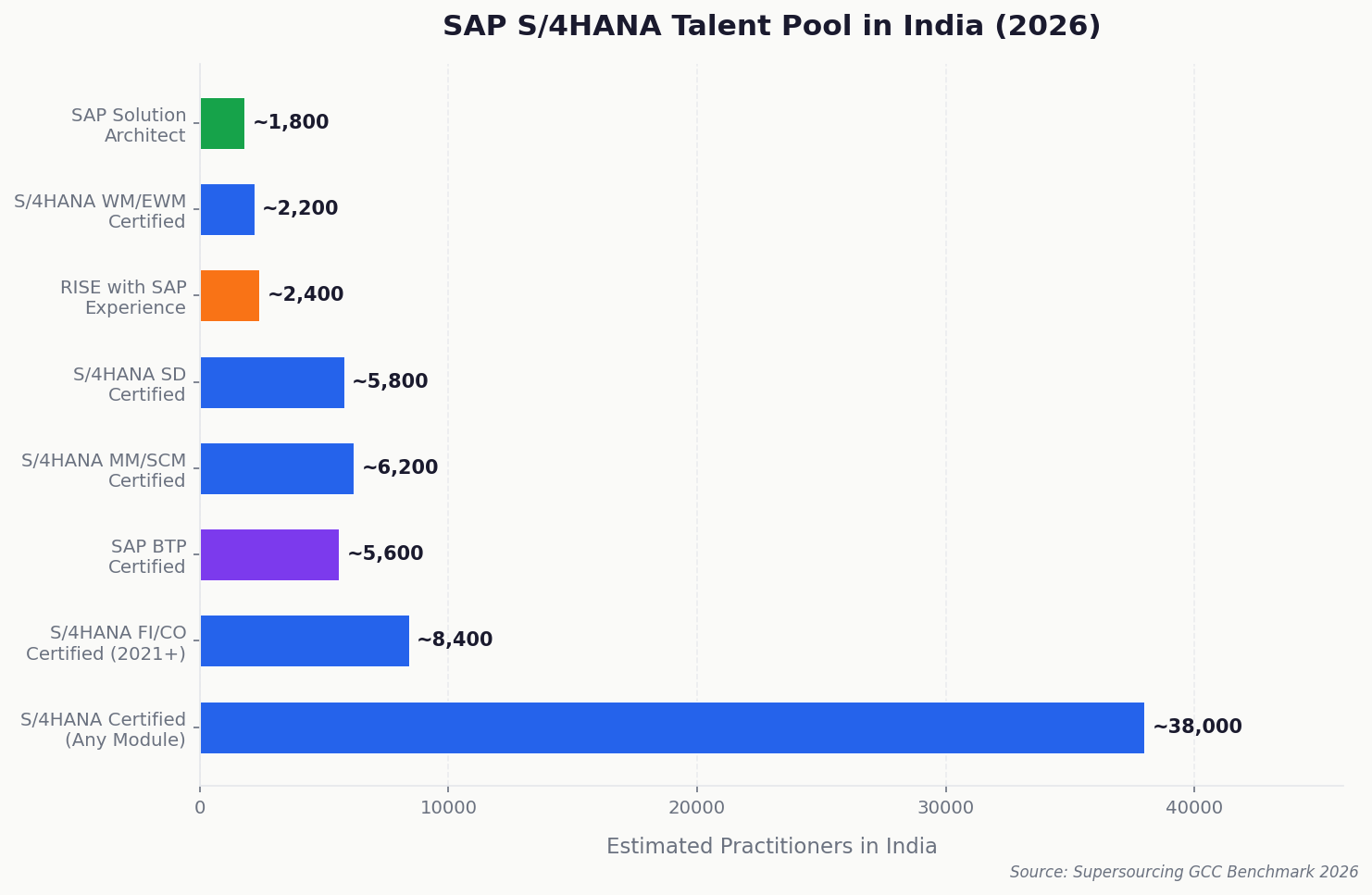
The S/4HANA-specific pool:
| Certification / Experience | Estimated India Pool | Notes |
| SAP S/4HANA Certified (any module, current version) | ~38,000 | Largest S/4HANA certified pool outside Germany. |
| S/4HANA FI/CO Certified (S/4HANA 2021 or above) | ~8,400 | Core finance module. Deepest S/4HANA pool. |
| S/4HANA MM/SCM Certified | ~6,200 | Materials management and supply chain. |
| S/4HANA SD Certified | ~5,800 | Sales and distribution. |
| S/4HANA PP/QM Certified | ~3,400 | Production planning. Manufacturing vertical. |
| S/4HANA WM/EWM Certified | ~2,200 | Warehouse management. Thinner pool. |
| RISE with SAP deployment experience | ~2,400 | Cloud deployment on RISE. Growing but not yet mainstream. |
| SAP BTP (Business Technology Platform) | ~5,600 | Integration, extension, and analytics on BTP. |
| SAP Solution Architect (TOGAF + SAP) | ~1,800 | Architecture-level, multi-module depth. |
The ECC-to-S/4HANA transition gap:
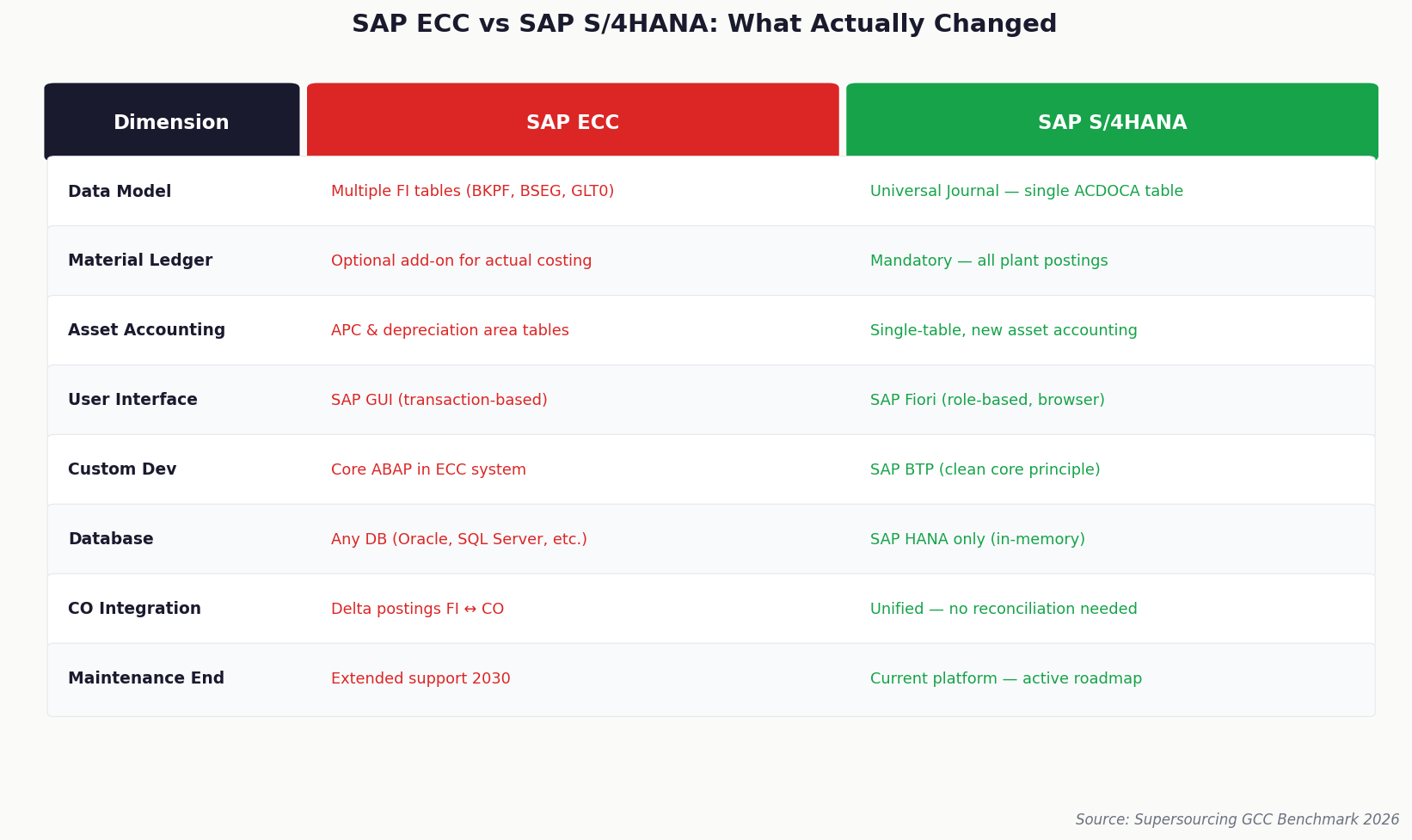
This is the central hiring challenge in India SAP IT staffing in 2026. India’s SAP talent pool has been shaped by 25 years of SAP ECC delivery. Hundreds of thousands of SAP consultants built careers on ECC 6.0. S/4HANA is architecturally different; the Universal Journal replaces multiple FI tables, the material ledger is mandatory, the data model is simplified, and the user experience has moved to SAP Fiori.
An SAP ECC FI consultant with 12 years of experience has genuine SAP depth. They do not automatically have S/4HANA FI depth. The Universal Journal architecture, the new asset accounting approach (parallel ledger), the simplified data model, these are not small deltas from ECC. They require specific learning and ideally production implementation experience.
Vendors with large SAP practices will offer ECC consultants for S/4HANA programs because that’s what their bench contains. The misrepresentation is sometimes deliberate, more often it reflects the vendor’s genuine belief that “SAP FI experience is SAP FI experience.” It isn’t. Ask for S/4HANA version experience specifically on every CV.
The S/4HANA version currency problem:
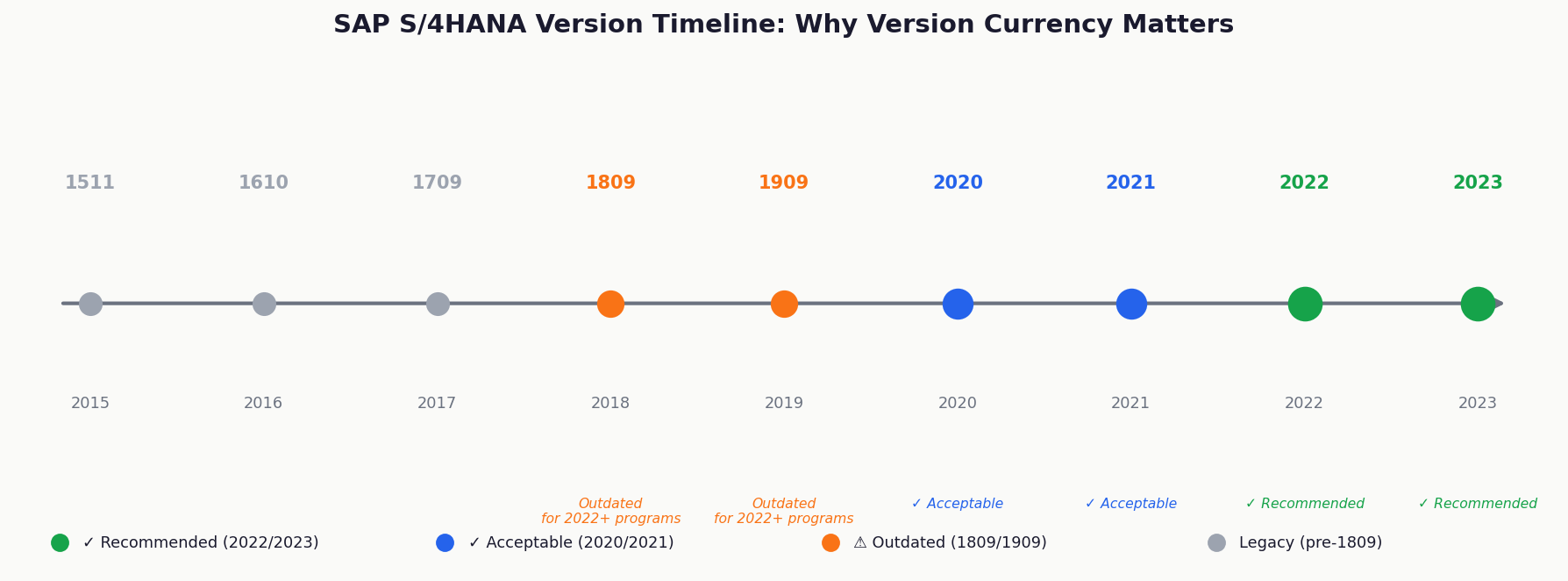
S/4HANA has been released annually since 2015: 1511, 1610, 1709, 1809, 1909, 2020, 2021, 2022, 2023. Each version introduces significant new functionality, changed configuration approaches, and deprecated legacy features. A consultant whose primary S/4HANA experience is in 1809 (released 2018) has worked on a version 5+ years behind the current release. S/4HANA 2022 and 2023 have significant changes to RISE with SAP architecture, SAP Fiori UX, and BTP integration patterns that 1809-era consultants have not experienced.
For current S/4HANA programs, require experience on S/4HANA 2020 or above. For RISE with SAP programs specifically, require 2021 or above RISE reached mainstream availability from 2021.
Where the talent lives:
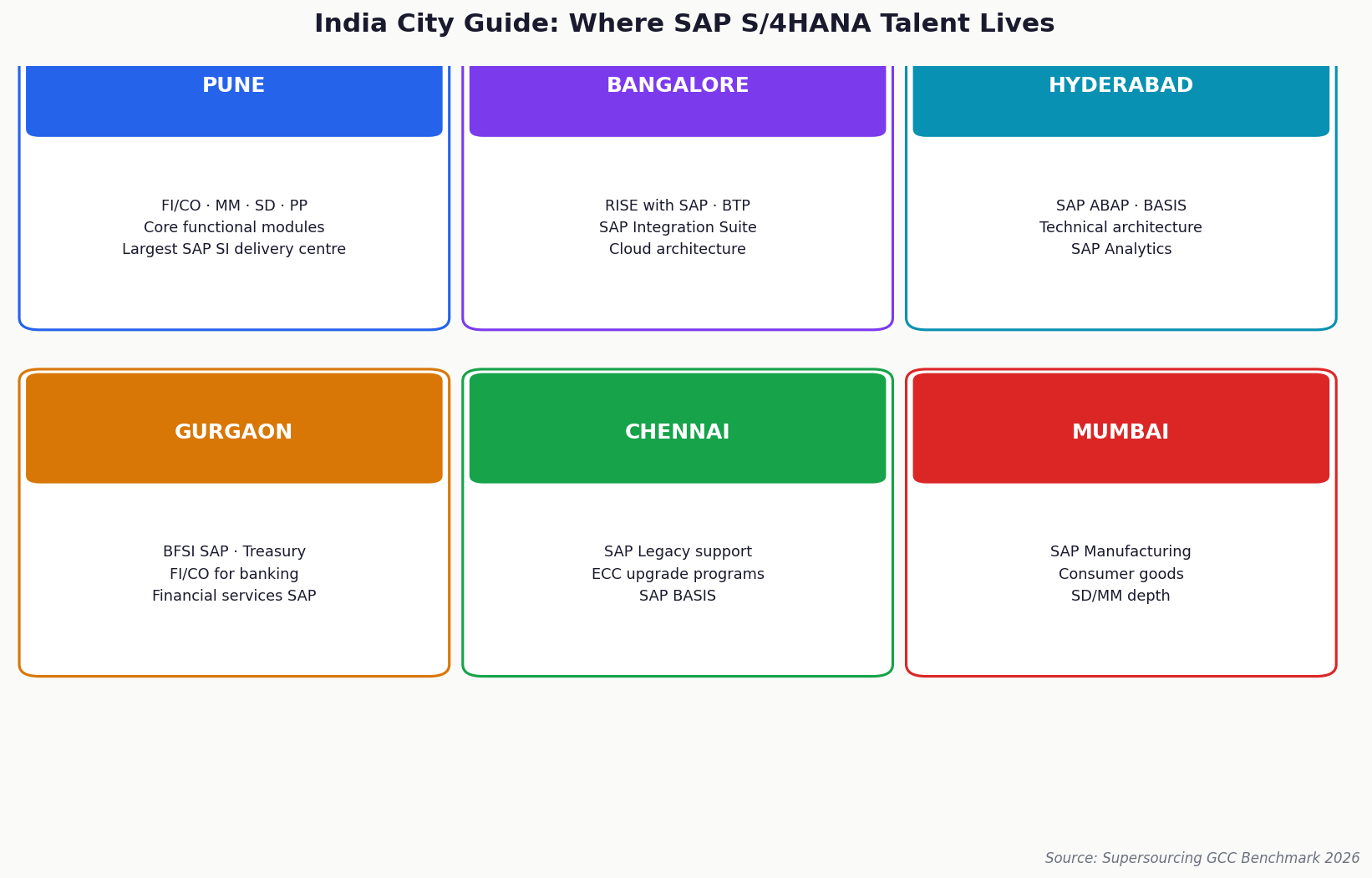
| City | Dominant SAP S/4HANA Specialisations | Why |
| Pune | FI/CO, MM, SD, PP core functional modules | Largest SAP SI delivery center concentration. TCS, Infosys, Cognizant, Wipro SAP CoEs. Deepest functional module bench. |
| Bangalore | RISE with SAP, SAP BTP, SAP Integration Suite, cloud architecture | Cloud-native technology talent. SAP India headquarters. BTP and cloud deployment expertise. |
| Hyderabad | SAP ABAP, SAP BASIS, SAP technical architecture, SAP analytics | Microsoft ecosystem + SAP technical depth. Strong ABAP and technical consulting pool. |
| Gurgaon | BFSI SAP (FI/CO, treasury), S/4HANA for financial services | BFSI GCC concentration. SAP for banking and financial services programs. |
| Chennai | SAP legacy support, ECC upgrade programs, SAP BASIS | TCS/Cognizant legacy. Strong in support, maintenance, and ECC-to-S/4HANA assessments. |
| Mumbai | SAP for manufacturing, SAP for consumer goods, SD/MM depth | Proximity to India’s manufacturing and FMCG industry. Strong in manufacturing verticals. |
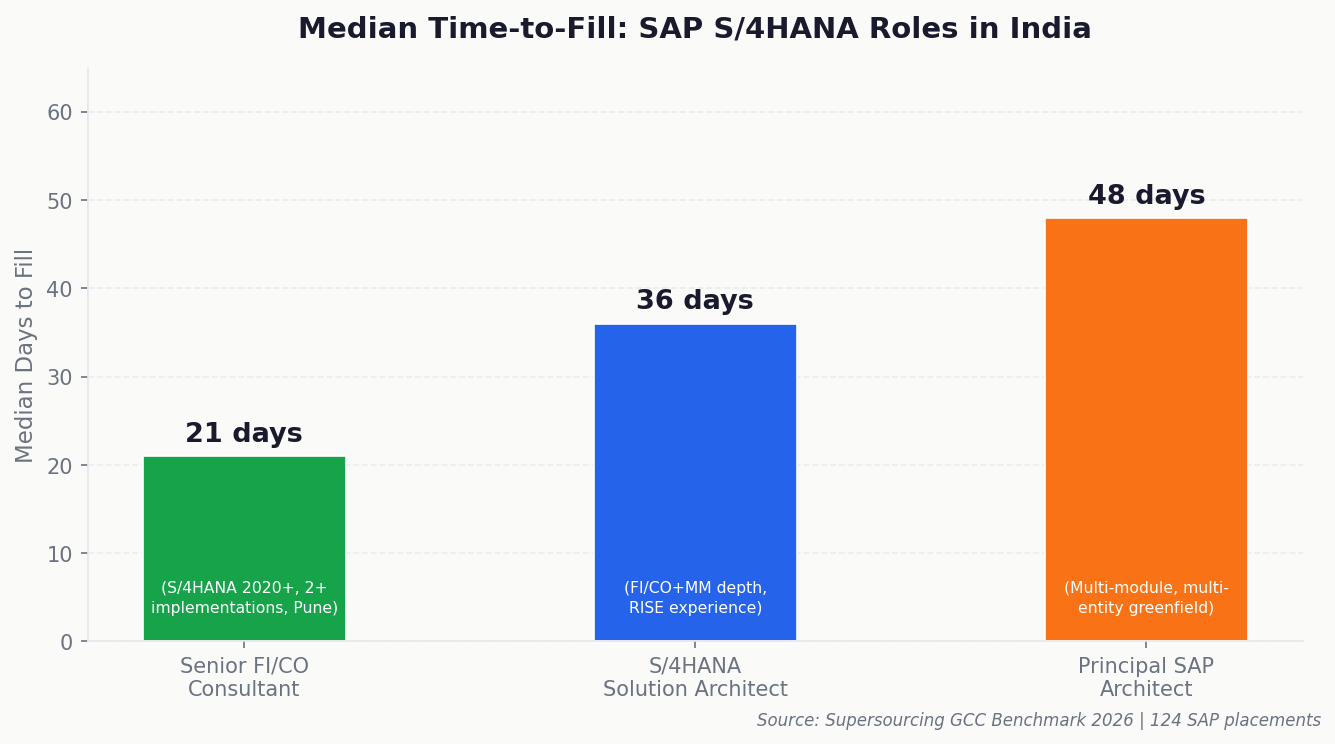
Supersourcing Index: Across 124 SAP placements in the Supersourcing GCC Benchmark 2026, median time-to-fill for a Senior SAP S/4HANA FI/CO Consultant (S/4HANA 2020 or above, 2+ implementations) in Pune was 21 calendar days. For an S/4HANA Solution Architect with FI/CO and MM depth and RISE with SAP experience: 36 days. For a Principal SAP Architect with multi-module, multi-entity greenfield implementation experience: 48 days.
Red flag: Any vendor who presents SAP ECC certifications for an S/4HANA program without explicitly noting the ECC-to-S/4HANA gap is either not paying attention or assuming you won’t notice. The certification name tells you “SAP Certified Application Associate Financial Accounting with SAP ERP” is ECC. “SAP Certified Application Associate SAP S/4HANA for Financial Accounting” is S/4HANA. They look similar. They are different products.
What You’re Really Paying
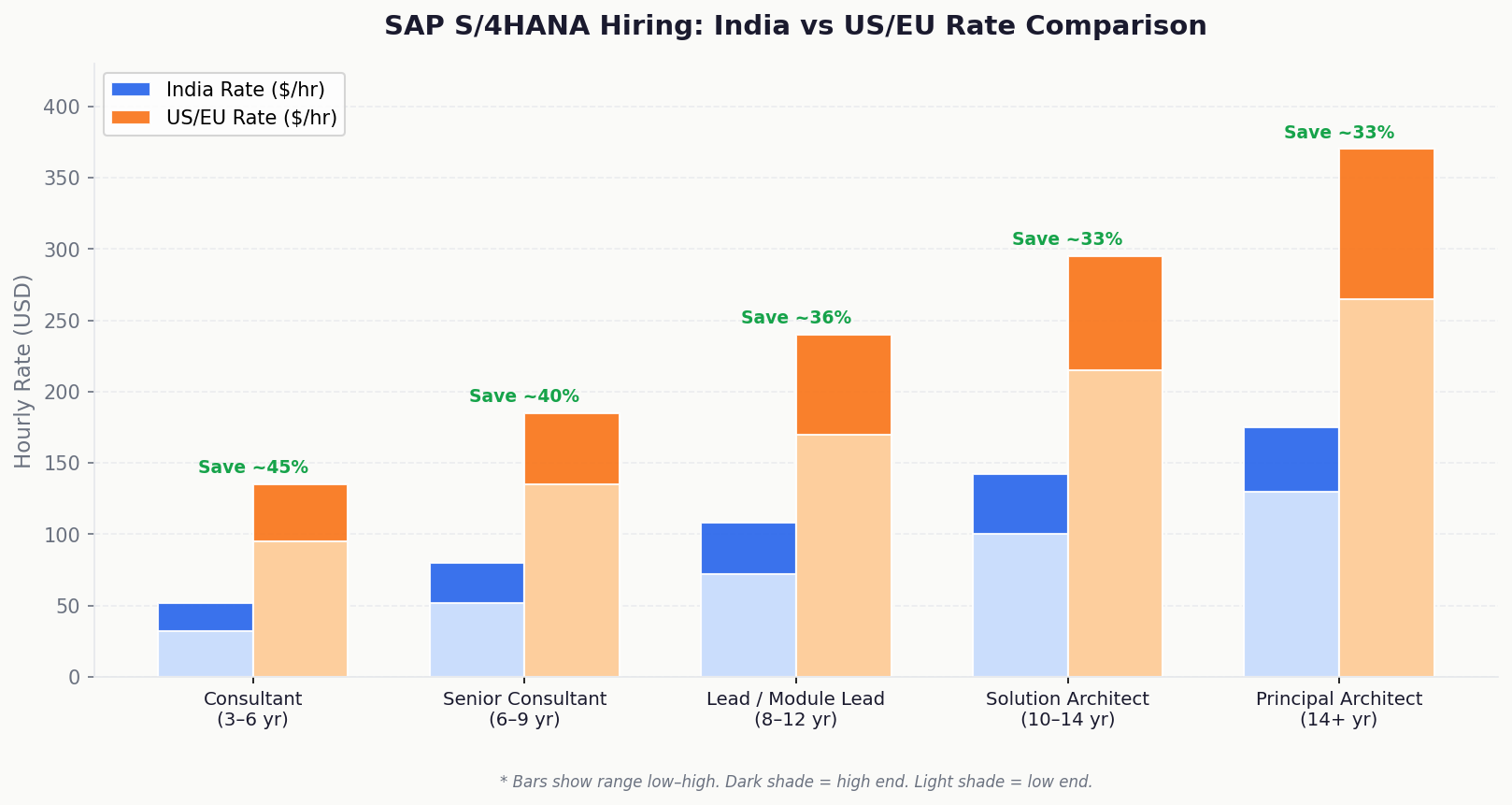
Rate Table by Level
| Level | Experience | India Rate ($/hr) | US/EU Equivalent ($/hr) | Annual Saving ($) |
| SAP S/4HANA Consultant | 3–6 yr | $32–52 | $95–135 | $135K–$171K |
| Senior Consultant | 6–9 yr | $52–80 | $135–185 | $171K–$218K |
| Lead Consultant / Module Lead | 8–12 yr | $72–108 | $170–240 | $202K–$275K |
| S/4HANA Solution Architect | 10–14 yr | $100–142 | $215–295 | $239K–$319K |
| Principal Architect / Program Director | 14+ yr | $130–175 | $265–370 | $280K–$405K |
The 4 Cost Layers
- Layer 1 Gross CTC A Senior S/4HANA FI/CO Consultant with 7 years and current certification earns ₹32–50 LPA. At ₹96.4/$1, that’s $33K–$52K annually $16–25/hr at gross level.
- Layer 2 Employer Burden PF (12%), ESIC (3.25%), Gratuity (8.33–20%), bonus. Total: 22–28% on top of gross CTC.
- Layer 3 Vendor Margin For SAP specialist staffing: 20–26%. SAP is a premium delivery stack. Large SI vendors charge at the high end of margin. Boutique SAP staffing firms typically charge 18–22%.
- Layer 4 What Hits Your Invoice Senior SAP S/4HANA Consultant: $52–80/hr. At 2,000 hours/year, a 10-consultant team at blended $68/hr costs $1.36M annually. US/EU equivalent: $3.0–3.5M. Annual saving on a 10-person team: $1.6–2.2M.
- The S/4HANA version premium: Consultants with S/4HANA 2022 or 2023 production experience command 15–20% premium over consultants with 1809 or 1909 experience. The most recent version experience is the most scarce and the most relevant for current programs.
- The RISE with SAP premium: RISE with SAP deployment experience commands 20–28% premium over on-premise S/4HANA experience. Cloud deployment on RISE introduces SAP BTP integration, SAP Integration Suite, and RISE-specific commercial and technical constraints that on-premise consultants don’t have.
- The greenfield premium: Greenfield S/4HANA implementation experience Universal Journal from scratch, new asset accounting, greenfield data migration commands 12–18% premium over brownfield or conversion experience. Greenfield requires more architectural depth; fewer consultants have it.
- Blended team math: A 10-consultant S/4HANA program team 1 solution architect, 2 module leads, 5 senior consultants, 2 mid-level consultants at market rates runs approximately $1.2–1.5M annually. US/EU equivalent: $2.8–3.6M. Annual saving: $1.6–2.1M.
The Certification Hierarchy What Actually Matters
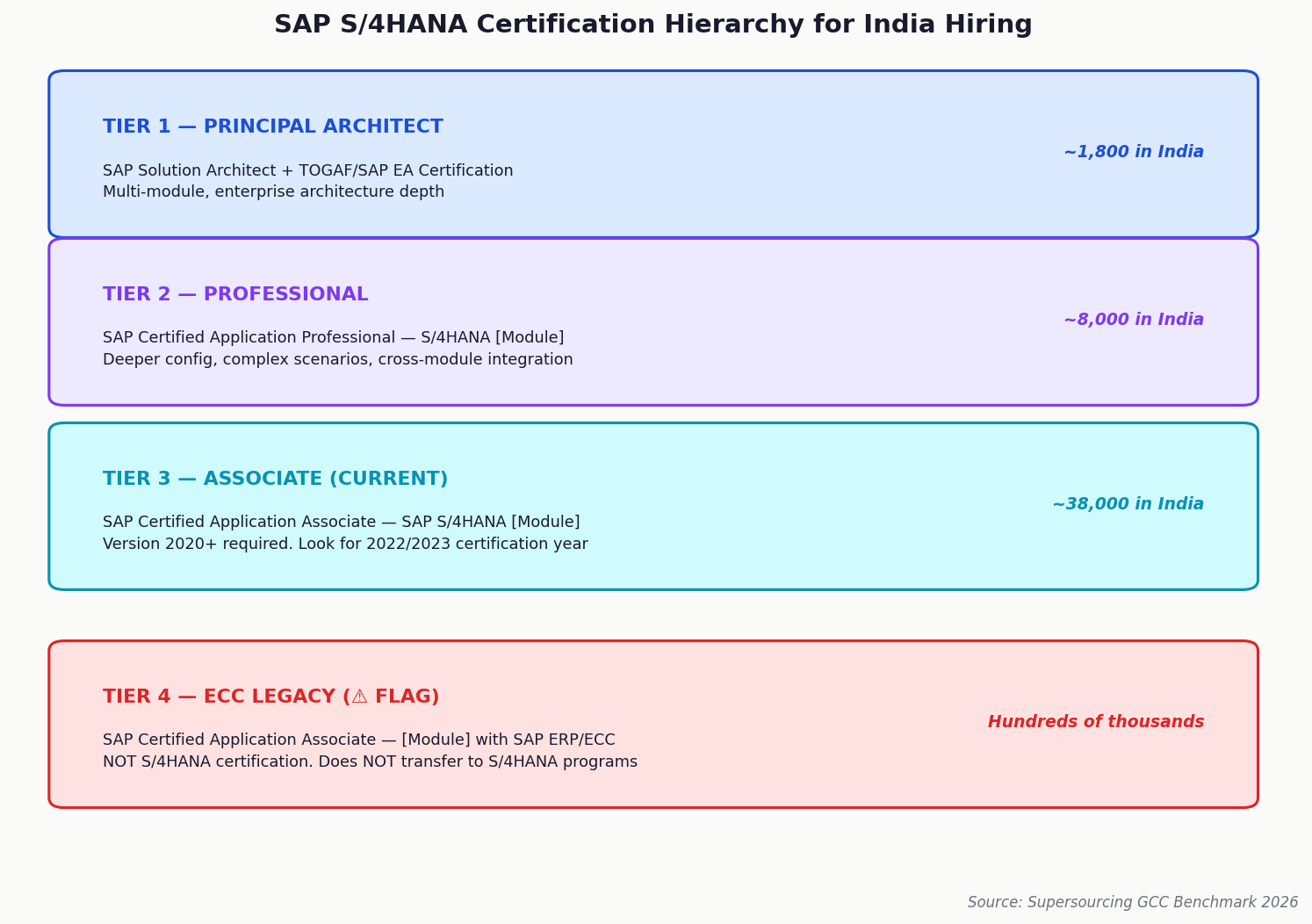
SAP Certified Application Associate [Module] with SAP ECC
Legacy ECC certifications. Valid for ECC maintenance and upgrade programs. Not S/4HANA certifications. Identifiable by the absence of “S/4HANA” in the certification name. Any certification without “S/4HANA” in the name is an ECC or legacy credential.
SAP Certified Application Associate SAP S/4HANA [Module]
The current S/4HANA module certifications. Each released version has a corresponding certification “SAP S/4HANA for Financial Accounting Associates (SAP S/4HANA 2022)” is version-specific. The version year in the certification name tells you when the consultant is certified. A certification for S/4HANA 1809 is from 2018 potentially outdated for a 2022/2023 program.
SAP Certified Application Professional SAP S/4HANA [Module]
The professional-level credential above Associate. Tests deeper functional knowledge, configuration of complex scenarios, and cross-module integration. More relevant than Associate for lead consultant and architect roles. Approximately 8,000 professional-level SAP S/4HANA certifications are held in India.
SAP Certified Technology Associate / Professional SAP BTP / SAP Integration Suite
Technical certifications for SAP’s cloud integration and extension platform. Required for BTP development roles, Integration Suite implementation, and RISE with SAP technical architecture. Approximately 5,600 BTP-certified practitioners in India.
SAP Solution Architect certification (combined with TOGAF or SAP EA certification)
Architecture-level credentials. SAP’s Learning Hub has enterprise architecture certification tracks. Approximately 1,800 SAP solution architects in India with multi-module and enterprise architecture depth.
How to verify: SAP certifications are verified through the SAP Global Certification directory at training.sap.com/certification/verify. Enter the candidate’s full name and certification ID. Every active SAP certification appears with the exact certification name (including version year) and active/inactive status. This is the first 90-second check before any SAP interview.
The version year trap: An “SAP S/4HANA FI Associate” certification from 2018 (covering S/4HANA 1809) is technically an S/4HANA certification. It is also 7 years old and covers three major releases behind S/4HANA 2022. Always check the version year in the certification name. Require certification for S/4HANA 2020 or above for current programs.
The JD That Attracts the Right Candidates
JD 1: Senior SAP S/4HANA FI/CO Consultant (6–9 years)
Senior SAP S/4HANA FI/CO Consultant Remote from India Engagement: Staff Augmentation | Duration: 18 months Rate: ₹32–50 LPA CTC equivalent | Billing: $52–80/hr (vendor-facing)
What you’ll own: S/4HANA FI/CO configuration for a greenfield implementation Universal Journal setup, parallel accounting (US GAAP + IFRS), cost center hierarchy, profit center accounting, and internal orders. You’ll work alongside our solution architect on the chart of accounts design, fiscal year variant configuration, and multi-entity ledger assignments. Measured on configuration quality, integration test pass rate, and documentation completeness.
What we require:
- SAP Certified Application Associate or Professional SAP S/4HANA for Financial Accounting, version 2020 or above (verified at training.sap.com before interview)
- 6–9 years SAP experience, minimum 2 complete S/4HANA FI/CO implementations (not ECC)
- Universal Journal experience chart of accounts design, ledger configuration, fiscal year variants
- Parallel accounting configuration ledger group assignments, accounting principle mapping, currency configuration
- CO module depth cost center accounting, internal orders, profit center accounting, product costing
- Multi-entity/multi-company code experience preferred
What disqualifies you:
- SAP ECC FI/CO only experience presented as S/4HANA capability
- S/4HANA certification below 2020 version as primary credential for a 2022/2023 program
- No Universal Journal production configuration experience
- “S/4HANA experience” gained entirely in training systems or SAP CAL environments
Interview process: Technical screen (30 min) → Live S/4HANA FI configuration scenario (90 min, SAP system access provided) → Universal Journal architecture discussion with Solution Architect (45 min)
JD 2: SAP S/4HANA Solution Architect Greenfield Multi-Module (12+ years)
SAP S/4HANA Solution Architect India GCC or BOT Engagement: GCC Build or BOT | Duration: 24+ months CTC: ₹85–125 LPA | Billing: $100–142/hr (vendor-facing)
What you’ll own: End-to-end S/4HANA 2022 greenfield architecture across FI/CO, MM, SD, and PP. You will own the system landscape design, integration architecture with SAP Integration Suite and SAP BTP, data migration approach (LTMC/LTMOM), transport management strategy, and fit-to-standard workshop leadership. Technical authority for a team of 12–20 SAP consultants.
What we require:
- SAP Certified Application Professional S/4HANA (multi-module, version 2021 or above)
- 12+ years SAP experience, minimum 3 complete S/4HANA greenfield implementations as architect
- RISE with SAP deployment experience SAP BTP architecture, Integration Suite configuration, RISE commercial model understanding
- Data migration architecture LTMC/LTMOM approach, legacy data extraction, cut-over strategy for multi-entity programs
- Fit-to-standard methodology experience leading fit-to-standard workshops, managing delta design decisions
- Integration architecture SAP Integration Suite, API Management, event mesh
Interview process: Architecture scenario presentation (60 min) → Live fit-to-standard scenario role play (45 min) → Reference call with prior Program Director or CIO → Certification verification (training.sap.com, done before scheduling)
What most enterprise JDs get wrong for SAP S/4HANA:
They say “SAP FI/CO experience required” which returns every SAP ECC FI consultant in India plus the S/4HANA pool. They don’t specify the S/4HANA version which means consultants with 1809 experience apply alongside 2022 consultants. They don’t specify greenfield vs brownfield completely different skill sets.
They list “ABAP knowledge preferred” for functional roles which signals confusion about the difference between functional and technical SAP profiles. And they don’t specify RISE vs on-premise cloud deployment on RISE requires a different technical context than on-premise.
How to Verify Experience Not Just Credentials
The 3 verification steps before any SAP interview:
Step 1: training.sap.com certification verification
Before scheduling any interview: go to training.sap.com/certification/verify, enter the candidate’s name and certification ID. Confirm: the certification name includes “S/4HANA” (not ECC), the version year in the certification name is 2020 or above for current programs, and the status is Active. This 90-second check eliminates ECC consultants presented as S/4HANA and outdated version certifications.
Step 2: Implementation count and version specificity
Ask in writing before scheduling: “How many complete S/4HANA go-lives have you been part of? What was the S/4HANA version on each? Were they greenfield or brownfield?” Real S/4HANA consultants answer immediately with specific versions and client contexts. Consultants with ECC experience dressed up as S/4HANA become vague. “2 full cycle S/4HANA 2022 implementations, both greenfield, manufacturing vertical” is a specific answer. “Multiple SAP implementations across finance modules” is not.
Step 3: Universal Journal / Simplification Item knowledge
For FI/CO roles: ask one qualifying question before the technical interview. “What are the three most significant data model changes in S/4HANA FI compared to ECC FI?” Real S/4HANA FI consultants immediately name: Universal Journal (ACDOCA table replacing multiple FI and CO tables), new Asset Accounting (no more APC and depreciation area tables, single table approach), and simplified CO integration (cost elements now maintained as G/L accounts). ECC consultants describe ECC architecture. This one question filters 50% of mismatched FI/CO submissions.
The 5 interview questions that expose fake S/4HANA seniority:
Q1: Universal Journal Architecture “Explain the Universal Journal in S/4HANA FI what tables it replaces from ECC, how it changes the posting logic, and what the implications are for parallel accounting configuration.”
Real answer: ACDOCA replaces BKPF/BSEG (document header/line items), GLT0 (general ledger totals), COEP (CO line items), and multiple CO summary tables. Every FI and CO posting writes to ACDOCA in a single document. Parallel accounting uses ledger groups; each ledger (0L for leading, non-leading for IFRS/local GAAP) receives its own line item in ACDOCA. The implication: no more reconciliation between FI and CO, no more delta postings from CO to FI, and parallel ledger configuration happens at chart of accounts and ledger group assignment level. They describe specific configuration steps.
ECC consultant describes the Universal Journal as “a consolidated table” without explaining the replacement of BKPF/BSEG or the parallel accounting mechanics.
Q2: Brownfield Conversion Assessment “Walk me through how you’ve assessed an ECC 6.0 system for S/4HANA brownfield conversion, the simplification items you check first, the most common blockers you’ve encountered, and how you’ve handled custom code remediation.”
Real answer: describes the SAP Readiness Check (transaction SYCM or the cloud-based SAP Readiness Check tool), the simplification items for the modules in scope (Finance simplification items around asset accounting, CO-PA migration, material ledger activation), the custom code analysis using SAP Custom Code Migration app or ABAP Test Cockpit, and specific blockers they’ve encountered unused customer-specific coding blocks, RFC function modules calling deprecated BAPIs, Z-programs using ECC-specific table structures. They describe remediation approaches for each.
Candidate without brownfield experience describes the concept of brownfield conversion without specific simplification item knowledge or custom code remediation experience.
Q3: Material Ledger in S/4HANA “In S/4HANA, the material ledger is mandatory. How does that change the material valuation approach for a manufacturing client coming from ECC where the material ledger was optional, and what configuration decisions does this force?”
Real answer: In ECC, the material ledger was an optional add-on for actual costing. In S/4HANA, it’s the standard valuation mechanism every material-bearing posting writes to the material ledger. For a client coming from ECC without material ledger, this means: activating material ledger for all plants, deciding on the valuation variant (standard price vs moving average), configuring the actual costing run if actual costing is required, and planning for the performance implications of material ledger postings on high-volume manufacturing transactions. They describe specific configuration decisions and client discussions they’ve had.
Consultant without S/4HANA manufacturing experience describes the material ledger conceptually. Cannot describe the mandatory activation implications or the configuration decisions it forces.
Q4: SAP Fiori Architecture “How does SAP Fiori change the technical architecture of an S/4HANA implementation compared to SAP GUI, and what are the performance and governance considerations for a 5,000-user Fiori deployment?”
Real answer: Fiori runs on the SAP Gateway layer (ABAP system) with OData services or on SAP BTP with Launchpad Service for cloud deployments. For on-premises, this means SAP Gateway configuration, OData service activation, Fiori catalog and group assignments for role-based access, and ICF service activation for UI5 apps.
Performance considerations: Fiori catalog loading time (number of tiles per role), OData service response time (backend query optimization), and network latency for browser-based access vs SAP GUI. Governance: tile assignment management, role to catalog mapping, Fiori app upgrade considerations on S/4HANA version upgrades. They name specific configuration transactions and performance tools.
Consultant without S/4HANA Fiori depth describes Fiori as “the new SAP user interface” without describing Gateway architecture, OData services, or performance considerations.
Q5: RISE with SAP Architecture “What changes in the technical architecture and integration approach when deploying S/4HANA on RISE compared to on-premise, and what are the specific SAP BTP services required for a typical RISE integration program?”
Real answer: RISE with SAP moves the S/4HANA system to SAP-managed infrastructure on a hyperscaler (AWS, Azure, GCP). Technical architecture changes: no SAP BASIS access below the application layer (SAP manages BASIS), integration via SAP Integration Suite (cloud-based integration replacing on-premise SAP PI/PO), extensions via SAP BTP (replacing ECC custom ABAP in the core for clean core principle), monitoring via SAP Cloud ALM.
BTP services required: Integration Suite (for API-based integration), Extension Suite (for custom apps), SAP Analytics Cloud (for embedded analytics). They describe specific RISE commercial model elements (what’s included in RISE vs additional) and clean core implications.
Consultant without RISE experience describes RISE as “SAP on the cloud” without describing the BTP architecture requirements or clean core implications.
8 CV red flags:
- SAP certifications without “S/4HANA” in the certification name for an S/4HANA program
- “S/4HANA experience” with certification version 1809 or 1909 for a 2022/2023 program
- “Universal Journal experience” without being able to name ACDOCA the table name is fundamental
- “RISE with SAP experience” on a project starting before 2021 RISE wasn’t generally available before then
- “Greenfield implementation” experience on a project that completed in under 8 months for a complex scope genuine greenfield S/4HANA for 5+ legal entities takes 14–24 months
- “S/4HANA FI architect” with no parallel ledger or new asset accounting configuration experience
- Multiple S/4HANA “implementations” at the same company a company typically does one S/4HANA implementation; multiple entries at the same client are likely phase extensions, not separate implementations
- “SAP HANA experience” listed as equivalent to “SAP S/4HANA experience” SAP HANA is the database; S/4HANA is the application suite that runs on HANA. They are different things.
How to Source What’s Working, What Isn’t
What’s working in 2026:
SAP Partner ecosystem in India.
SAP maintains a tiered partner network in India Gold, Platinum, and SAP Global Value Added Resellers. Partners have certified headcount requirements and direct access to the SAP talent community. An inquiry to 3–4 SAP Gold or Platinum partners about available S/4HANA bench with version specificity yields a verified shortlist faster than any job board.
SAP Community India network.
SAP Community (community.sap.com) has an active India contribution base. SAP Community moderators, SAP Mentors, and frequent technical contributors are identifiable, senior practitioners with verifiable public track records. There are approximately 40–50 active SAP Mentors in India; these are architect-level practitioners recognized by SAP directly.
3 ready-to-use LinkedIn boolean search strings:
- String 1 (Senior FI/CO S/4HANA): “SAP S/4HANA” AND (“FI/CO” OR “Finance” OR “Controlling”) AND (“Senior” OR “Lead” OR “Architect”) AND (“Pune” OR “Bangalore”) AND “2022” OR “2023”
- String 2 (RISE with SAP): “RISE with SAP” AND (“S/4HANA” OR “BTP”) AND (“Architect” OR “Lead”) AND “India”
- String 3 (Greenfield Implementation): “SAP S/4HANA” AND “greenfield” AND (“Architect” OR “Solution Architect”) AND “India”
SAP TechEd India and SAP Inside Track events.
SAP holds annual TechEd events and community-driven Inside Track events in India. Speakers and active participants are senior S/4HANA practitioners with verifiable public presence. Sponsoring or attending these events provides direct access to the top 5% of the India SAP community.
Supersourcing pre-vetted bench. For Senior SAP S/4HANA FI/CO Consultants (version 2020+, 2+ implementations), Supersourcing’s median fill time is 21 calendar days from JD sign-off.
What isn’t working:
“SAP consultant” postings without S/4HANA version specificity.
Returns the full India SAP pool predominantly ECC-experienced. Adding “S/4HANA” without a version year still returns 1809 and 1909 experience for current programs. Specify the version year.
Accepting large SI vendor SAP bench without version and implementation count verification.
Large SI firms (TCS, Infosys, Wipro) have enormous SAP benches. The majority of their available bench is ECC-experienced or S/4HANA 1809/1909. Current version S/4HANA experience (2021, 2022, 2023) is in active delivery not on bench. When a large SI vendor offers SAP bench quickly, verify the version.
Treating functional and technical SAP as interchangeable.
SAP functional consultants (FI/CO, MM, SD) configure business processes. SAP technical consultants (ABAP developers, BASIS administrators, BTP developers) build the technical infrastructure. They are completely different skill sets. A JD that mixes functional and technical requirements produces a confused sourcing response.
The Contract Stack for SAP Engagements
Clause 1: Individual Resource Approval with S/4HANA Version and Module Specification
SOW schedule must list: name, SAP certification name with version year, implementation count and versions, and module scope. “SAP S/4HANA FI/CO, version 2022, 2 greenfield implementations” is a contractual specification. A consultant substituted with ECC experience is a material scope misrepresentation.
Clause 2: Substitution Notice 21 Days
SAP programs have long ramp periods; a new consultant needs 4–8 weeks to understand the business processes, configuration decisions, and program context. A 21-day notice with a parallel running period minimises delivery disruption.
Clause 3: IP Assignment Configuration Documentation and Custom Development
Must cover: SAP configuration workbooks and specification documents (these are IP), custom ABAP programs and function modules, SAP BTP extensions and integration flows, data migration programs (LTMC/LTMOM templates), and custom SAP Fiori apps. Configuration documentation is often more valuable than code in SAP programs; the decisions embedded in a configuration workbook represent hundreds of hours of business analysis and technical design.
Clause 4: Transport Management Protocol
All development and configuration work must follow your transport management protocol Development → Quality → Production via transport orders. No direct production changes. No emergency transports without dual approval. This clause prevents the most common SAP governance failure consultants applying undocumented changes directly to production under time pressure.
Clause 5: Knowledge Transfer Requirement
SAP programs concentrate institutional knowledge in the consulting team. Require a structured knowledge transfer program as a delivery milestone not an afterthought at engagement end. Specify: configuration documentation standards (every configuration object documented), process documentation for each module, and at least 2 internal team members trained as system administrators for each module in scope.
Running an SAP Team at Scale
Transport discipline.
Every configuration change goes through a transport Development system → Quality Assurance system → Production. No exceptions for “quick fixes” in production. One direct production change that is undocumented creates an audit trail gap that surfaces at every subsequent upgrade and every audit. Zero tolerance for production direct changes is the single most important governance principle for an offshore SAP team.
Fit-to-standard ownership.
In a properly run S/4HANA implementation, the standard SAP processes are used wherever possible and custom development is a last resort. Offshore teams under pressure to deliver features sometimes default to custom ABAP rather than standard configuration. Require a delta design decision log for every deviation from standard what’s being customised, why standard doesn’t work, and what the upgrade impact is. Every custom ABAP program created should be approved by your solution architect.
Integration testing governance.
SAP integration testing testing FI postings from SD transactions, CO allocations to FI, MM goods receipt to FI requires cross-module coordination that offshore teams often don’t drive proactively. Require a formal integration testing protocol with cross-module test scripts, clear input/output ownership per module, and defect triage that involves consultants from both modules. Don’t let each module team test in isolation.
Early warning signals:
- Increasing transport volume without corresponding test documentation
- Delta design deviations approved without solution architect sign-off
- Sprint completions with no integration test evidence
- LinkedIn activity SAP certifications updated, connections from competing SI firms
Retention levers: S/4HANA version progression consultants who get exposure to the latest S/4HANA releases and RISE with SAP on your program are building current-version experience that is directly marketable. BTP exposure consultants who extend into SAP BTP integration and extension development on your program are upskilling into the highest-demand SAP skill set. Architecture involvement consultants who participate in fit-to-standard workshops and design decisions stay longer than pure configuration delivery roles.
When Things Go Wrong
Pattern 1: The ECC-to-S/4HANA Misrepresentation
Described in Section 1. Universal Journal misconfiguration, parallel ledger errors, materialledger conflicts all rooted in ECC consultants applying ECC logic to S/4HANA architecture. The Universal Journal question in Section 8 catches this in 3 minutes.
Pattern 2: The Brownfield Blocker
A UK-based retailer hired an offshore team for a brownfield S/4HANA conversion. The team was S/4HANA certified in 1909. The client’s target was 2022. The gap between 1909 and 2022 included significant changes to the Asset Accounting simplification items and changes to CO-PA migration both in scope.
The offshore team applied 1909-era conversion approaches to a 2022 target. Three simplification items that had changed between 1909 and 2022 were not handled correctly. The remediation required SAP consulting support from SAP directly at premium rates. Cost: £220K. Timeline extended by 14 weeks.
The version specificity requirement in the JD, the certification version check, and the Q2 brownfield interview question would have prevented this entirely.
Pattern 3: The Clean Core Violation
A US manufacturer running RISE with SAP hired offshore ABAP developers to build custom reports in the S/4HANA core using the same approach they used on ECC. On RISE with SAP, SAP’s clean core principle means custom development in the S/4HANA core creates upgrade risk and violates RISE support boundaries.
By month 8, the team had built 34 custom ABAP programs directly in the S/4HANA core. SAP’s RISE support team flagged this at the first quarterly review the customisations were outside the RISE support boundary. Migration to SAP BTP for all 34 programs took 16 weeks and $180K.
The RISE with SAP architecture question in Section 8 and the clean core clause in the contract (custom development goes to BTP, not core ABAP) would have prevented this.
When India Is the Wrong Call
Scenario 1: SAP programs requiring German language capability.
German-headquartered enterprises implementing S/4HANA with German-language business process documentation, German GAAP requirements, and German-speaking business stakeholders create a language barrier that significantly limits the India SAP pool.
While many senior India SAP consultants work effectively in English-only environments, programs where German language fluency is required for stakeholder engagement, documentation, or workshop facilitation have a materially smaller India pool. Consider DACH-based consultants for the stakeholder-facing roles and India-based consultants for the configuration and technical delivery roles.
Scenario 2: Highly regulated public sector SAP.
US federal, EU public sector, or defence-adjacent SAP programs with data classification requirements, security clearance requirements, or FedRAMP compliance constraints may restrict offshore access to SAP systems containing restricted data. For these programs, assess data residency and access classification before committing to an offshore delivery model.
Scenario 3: Sub-8 consultant programs with niche vertical configurations.
A 5-consultant SAP program for a highly specialised vertical SAP for Utilities (IS-U), SAP for Oil and Gas (IS-OIL), or SAP for Public Sector (IS-PS) has a thin India pool for the vertical-specific configuration requirements. Standard FI/CO and MM consultants from India are not automatically capable of vertical industry solutions. For niche vertical SAP programs, verify vertical-specific experience explicitly and consider that the India pool may be smaller than the general S/4HANA pool.
The Supersourcing Vendor Scorecard SAP Edition
Score your vendor before you sign. Maximum 100 points. Minimum threshold: 65.
Category 1: Bench Depth and Version Accuracy (0–20 pts)
| Criterion | 0 | 10 | 20 |
| Can produce certification names with version years for all claimed bench within 24 hours | Cannot | Some | All bench, version years confirmed |
| S/4HANA 2020+ experience for claimed S/4HANA bench | 1809/1909 only | Mixed | 2020+ confirmed |
| ECC vs S/4HANA distinction acknowledged proactively | Conflates them | Distinguishes when asked | Proactively separates with evidence |
Category 2: Vetting Process (0–20 pts)
| Criterion | 0 | 10 | 20 |
| S/4HANA-specific technical assessment (not generic SAP) | Generic SAP questions | S/4HANA specific written | Live S/4HANA system access task |
| Universal Journal / simplification item questions in screen | Not asked | Asked generically | Specific configuration questions |
| Implementation count and version verified in screen | Not verified | Asked verbally | Documented with client references |
Category 3: Contract Readiness (0–20 pts)
| Criterion | 0 | 10 | 20 |
| IP Assignment covering configuration workbooks and custom development | Not available | Available on request | Standard, items named |
| Transport management protocol clause | Not present | Best effort | Contractual zero direct production changes |
| Knowledge transfer as a delivery milestone | Not present | End-of-engagement | Milestone throughout engagement |
Category 4: SAP Delivery Track Record (0–20 pts)
| Criterion | 0 | 10 | 20 |
| Named S/4HANA go-live clients (version specified) | None | Logo only | Named contact, version, go-live date |
| Greenfield vs brownfield experience verified | Not specified | Claimed | Verified with implementation type |
| Attrition on SAP programs | Unknown / >20% | 15–20% | <12% |
Category 5: Commercial Structure (0–20 pts)
| Criterion | 0 | 10 | 20 |
| Rate card by S/4HANA version and module | Single SAP rate | Module distinction | Version and module matrix |
| Substitution clause with 21-day notice and version equivalence | Not present | 14 days | 21 days with parallel running |
| SLA on replacement with S/4HANA version match | None | Best effort | Contractual 21-day SLA |
Score interpretation: 85–100 shortlist; 65–84 proceed with conditions; 45–64 significant risk; below 45 walk.
15 Questions Buyers Actually Ask
Q: What is the difference between SAP ECC and SAP S/4HANA?
SAP ECC (ERP Central Component) is SAP’s on-premise ERP platform that has been the enterprise standard since the early 2000s. SAP S/4HANA is the next-generation ERP platform built natively on SAP HANA in-memory database, launched in 2015. S/4HANA has a simplified data model; the Universal Journal replaces multiple FI and CO tables, the material ledger is mandatory, and the codebase is rewritten for in-memory performance. SAP ECC is end-of-mainstream-maintenance in 2027 (extended to 2030 for additional support fees). All new SAP implementations should be on S/4HANA. ECC experience does not directly transfer to S/4HANA without specific retraining on the simplified data model and new configuration approaches.
Q: What is greenfield vs brownfield S/4HANA implementation?
Greenfield is a new S/4HANA implementation built from scratch with new configuration, new data model, new business processes, with historical data migrated selectively. Brownfield (system conversion) migrates an existing ECC system to S/4HANA in place, converting the existing configuration and data to the S/4HANA data model. A third option, selective data migration, combines elements of both. They require different skills: greenfield requires Universal Journal architecture from scratch and fit-to-standard design; brownfield requires simplification item remediation and custom code migration expertise. Specify which you need in your JD. The consultant profiles are different.
Q: What is RISE with SAP?
RISE with SAP is SAP’s cloud ERP offering it bundles S/4HANA Cloud Private Edition (a single-tenant cloud deployment), SAP BTP credits, SAP Analytics Cloud, and SAP support into a single subscription. It runs on SAP-managed infrastructure on AWS, Azure, or GCP. The key technical differences from on-premise S/4HANA: SAP manages BASIS and infrastructure below the application layer, integration is via SAP Integration Suite (not on-premise PI/PO), and customisation follows the “clean core” principle (extensions go to BTP, not core ABAP). Approximately 2,400 consultants in India have RISE with SAP deployment experience as of May 2026.
Q: How do I verify an SAP certification is current for S/4HANA?
Go to training.sap.com/certification/verify and enter the candidate’s name and certification ID. Check three things: the certification name contains “S/4HANA” (not ECC), the version year in the certification name is 2020 or above for current programs, and the status is Active. A certification reading “SAP S/4HANA for Financial Accounting Associates (SAP S/4HANA 1809)” is an S/4HANA certification from 2018 covering a 7-year-old version. This takes 90 seconds before any interview is scheduled.
Q: Can I mix S/4HANA functional and ABAP technical consultants on the same offshore team?
Yes and most S/4HANA programs require both. Functional consultants configure business processes. ABAP technical consultants build custom reports, enhancements, and integrations. They work together but require different hiring processes, different technical assessments, and different certifications. Hire them as separate profiles with separate JDs and separate interview tracks. The common mistake is using a combined “SAP developer” JD that conflates functional and technical requirements and attracts neither effectively.
Q: What is SAP BTP and why does it matter for S/4HANA hiring?
SAP Business Technology Platform (BTP) is SAP’s cloud platform for integration, extension, analytics, and automation. For S/4HANA programs particularly RISE with SAP BTP is the designated location for custom development (clean core principle), integration flows (SAP Integration Suite replaces on-premise SAP PI/PO), and embedded analytics (SAP Analytics Cloud). A modern S/4HANA architect must understand BTP architecture. An ABAP developer building extensions for a RISE program must work in BTP, not core ABAP. BTP is the SAP technical skill most in demand in India in 2026 approximately 5,600 BTP-certified practitioners and growing rapidly.
Q: What’s the typical S/4HANA program structure for an offshore-heavy delivery?
Most enterprise S/4HANA programs use a hybrid model: onshore or near-shore solution architect and functional leads for business alignment, workshop facilitation, and stakeholder management; offshore India team for detailed configuration, ABAP development, integration development, and testing. The offshore team typically handles 60–70% of delivery effort by volume. The onshore team provides architectural direction and business interface. Programmes that try to move business process ownership entirely offshore where India consultants are driving fit-to-standard workshops with minimal onshore oversight fail at a significantly higher rate.
Q: How long does a typical SAP S/4HANA greenfield implementation take?
For a mid-size enterprise (2,000–10,000 employees, 3–5 legal entities, 4–6 modules): 16–22 months from project kickoff to go-live. For a large enterprise (10,000+ employees, 10+ legal entities, full module suite): 24–36 months. Programs that promise S/4HANA greenfield delivery in under 12 months for a complex scope are either descoping significantly or setting unrealistic expectations. Verify the timeline against the scope when evaluating vendor proposals.
Q: Is India-based SAP S/4HANA talent comparable to German or US talent?
For functional configuration of standard modules (FI/CO, MM, SD, PP) on current S/4HANA versions: functionally equivalent for delivery roles. India’s SAP practices have delivered thousands of S/4HANA implementations globally. For highly specialised vertical configurations (SAP for Automotive, SAP for Chemicals with complex product costing), and for the deepest RISE with SAP architecture expertise, the sharpest talent remains concentrated in Germany (SAP’s home country), Switzerland, and the US. For standard module configuration and technical development: India-based talent at verified S/4HANA experience delivers at global quality standards.
Q: What’s the hardest SAP S/4HANA profile to hire in India?
A Principal SAP S/4HANA Architect with confirmed greenfield implementations on S/4HANA 2022 or 2023, RISE with SAP deployment experience, SAP BTP integration architecture depth, and multi-entity (10+ legal entities) financial consolidation experience. This combination narrows the India pool to approximately 180 active practitioners. Median fill time: 48+ days. Expect top-of-range architect rates and competition from global SI programs for the same profiles.
Q: Is Supersourcing the right partner for a 5-consultant SAP program?
Not our ideal engagement. Our model is built for 10+ consultant programs with enterprise governance requirements. For a 5-consultant SAP program, an SAP Platinum partner with a staff augmentation offering is a better fit. We’d rather tell you that than win a deal we’ll underserve.
Closing
SAP S/4HANA hiring from India works. The functional depth is real, the implementation track record is extensive, and the savings versus US and European hiring are substantial $135K to $405K per consultant per year.
The failure mode is not India. It is hiring “SAP FI experience” when you need “SAP S/4HANA FI, version 2022, Universal Journal, greenfield.” The three-word addition S/4HANA, version year, implementation type eliminates 80% of mismatched CVs before a single interview is scheduled.
Book a 30-minute SAP S/4HANA Talent Discovery Call → No deck. Just the numbers and the bench.
