

Three years ago, DevSecOps was an aspirational practice for mature engineering teams. In 2026, it has become a non-negotiable requirement across enterprise software delivery, especially in regulated industries like BFSI, healthcare, and fintech. Security is no longer a post-deployment concern; it is embedded across the entire development lifecycle.
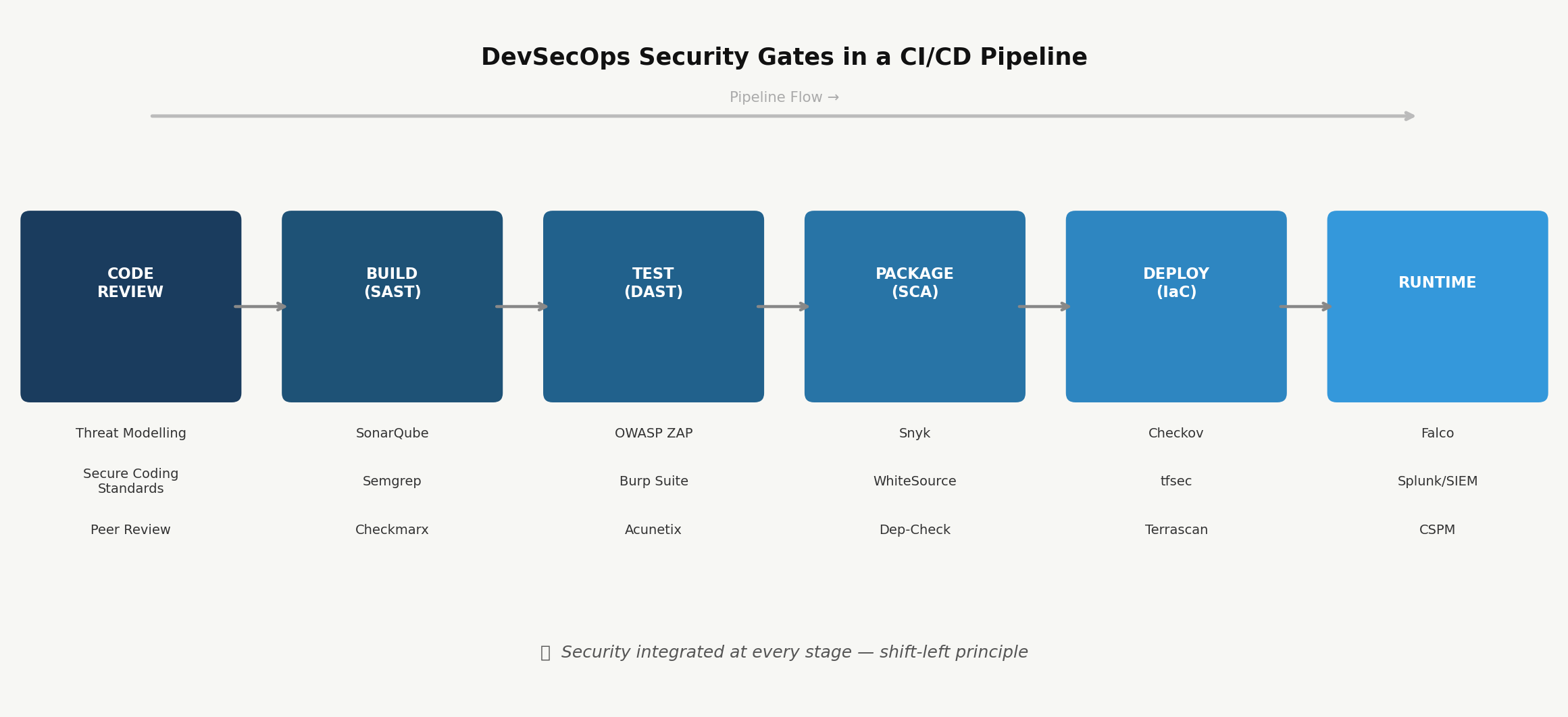
Hire DevSecOps Engineers in India is now a priority for Global Capability Centers (GCCs) and enterprise tech leaders looking to secure their CI/CD pipelines at scale. These engineers integrate automated security checks such as SAST, DAST, container scanning, and infrastructure-as-code validation directly into development workflows, ensuring vulnerabilities are caught before production.
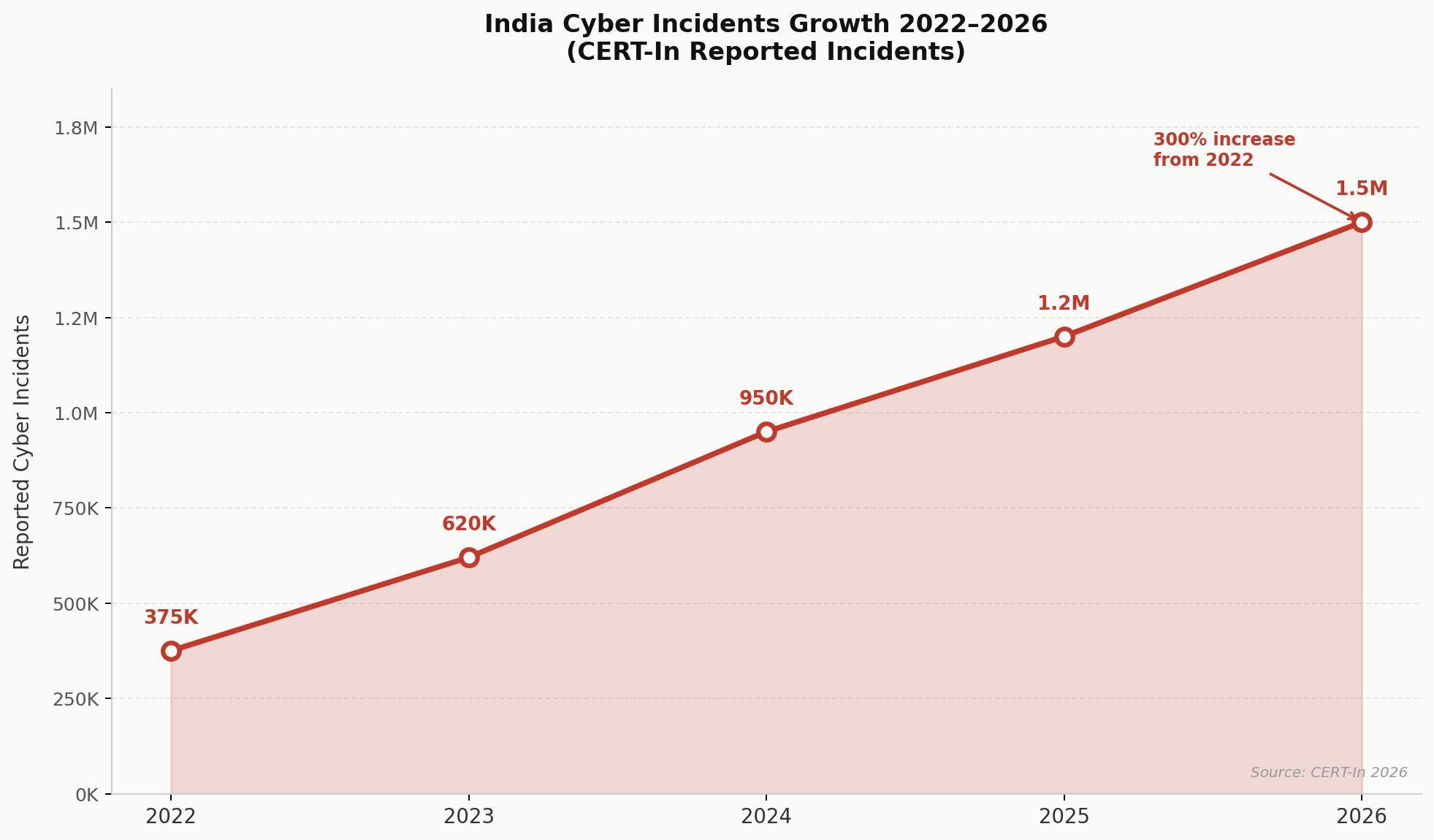
The urgency is backed by data. According to Cybersecurity Ventures, global cybercrime costs are expected to hit $10.5 trillion annually in 2026, highlighting the massive financial risk of insecure systems: Cybercrime Cost Report
As threats grow more sophisticated, the demand for DevSecOps engineers in India who can bridge development speed with security rigor is rising sharply, far outpacing supply.
What DevSecOps Actually Covers and Why It Is Not Just Security
The “Dev” and “Ops” in DevSecOps are not decorative. A DevSecOps engineer who only knows security, who cannot read application code, who does not understand CI/CD pipeline architecture, who has never configured a Kubernetes cluster cannot integrate security into a development pipeline because they do not understand the pipeline. DevSecOps requires the intersection of three disciplines: software engineering, operations/infrastructure, and security.
Secure development practices. Code review for security vulnerabilities SQL injection, XSS, insecure deserialization, hardcoded credentials, improper error handling. Threat modeling methodology STRIDE, PASTA, or attack tree analysis to identify security risks during design rather than after deployment. Secure coding standards implementation and developer security training.
A DevSecOps engineer who cannot review code for security vulnerabilities and explain them in developer terms is an InfoSec specialist, not a DevSecOps engineer.
Pipeline security integration the core DevSecOps capability. SAST (Static Application Security Testing) tools like SonarQube, Checkmarx, Semgrep, or Snyk Code integrated into CI pipelines to scan source code for vulnerabilities before merge. DAST (Dynamic Application Security Testing) tools like OWASP ZAP, Burp Suite, or Acunetix running automated attack simulations against deployed applications in test environments.
CA (Software Composition Analysis) Snyk, WhiteSource, or OWASP Dependency-Check scanning open-source and third-party library dependencies for known CVEs. Container image scanning Trivy, Clair, or Snyk Container scanning Docker images for OS package vulnerabilities and misconfigurations before deployment. IaC security scanning Checkov, tfsec, or Terrascan scanning Terraform, CloudFormation, or Kubernetes manifests for security misconfigurations before infrastructure is provisioned.
Cloud security architecture. Cloud security posture management (CSPM) continuous monitoring of cloud infrastructure configurations against security benchmarks (CIS Benchmarks, AWS Well-Architected Security Pillar, Azure Security Center). Identity and access management security least-privilege IAM role design, service account key management, privileged access management.
Network security VPC/VNet design for security, security group and network ACL configuration, east-west traffic inspection. Secret management HashiCorp Vault, AWS Secrets Manager, or Azure Key Vault integration for removing hardcoded credentials from application code and infrastructure configurations.
Container and Kubernetes security. Pod security standards (replace deprecated Pod Security Policies), RBAC design for Kubernetes workloads, network policies for east-west traffic restriction, container runtime security using tools like Falco for runtime threat detection, and admission controller configuration (OPA/Gatekeeper) for policy enforcement at the Kubernetes API level.
Incident detection and response. SIEM configuration Splunk, IBM QRadar, Microsoft Sentinel, or AWS Security Hub for log aggregation, correlation, and alert generation. Security alert triage and incident response playbook design. Threat intelligence integration for enriching security alerts with external context.
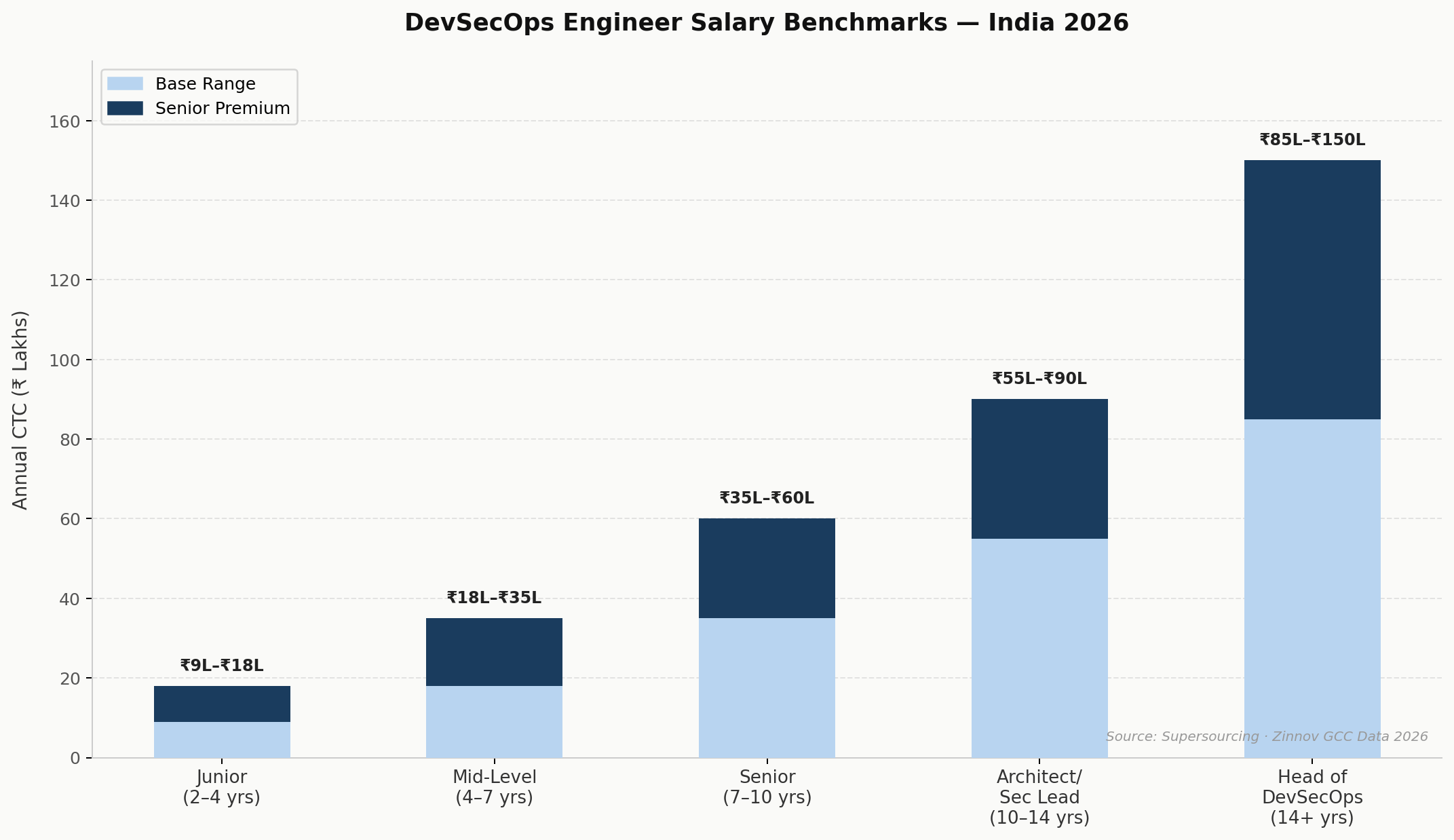
DevSecOps Salary Benchmarks India 2026
| Level | Experience | Annual CTC (INR) |
| Junior DevSecOps Engineer | 2–4 years | ₹9L – ₹18L |
| Mid-Level DevSecOps Engineer | 4–7 years | ₹18L – ₹35L |
| Senior DevSecOps Engineer | 7–10 years | ₹35L – ₹60L |
| DevSecOps Architect / Security Lead | 10–14 years | ₹55L – ₹90L |
| Head of DevSecOps / CISO-track | 14+ years | ₹85L – ₹1.5Cr |
Niche security skills command a 1.7x salary premium over core digital skills per Zinnov’s 2026 GCC data. Senior DevSecOps engineers with both pipeline security depth and cloud architecture skills are at the upper end of this premium bracket.
Contract and staff augmentation rates are customized to your security toolchain, cloud platform (AWS vs Azure vs GCP), compliance requirements, and seniority. Custom quote within 24 hours of receiving the JD.
What to Actually Assess in a DevSecOps Engineer Interview
Pipeline security integration shows me your pipeline, not your certifications.
Ask the candidate to describe the security gates they have implemented in a CI/CD pipeline which SAST tool, how they configured the rule set to balance security signal with developer noise, what their false positive rate was and how they managed it, how they handled the transition from “warn on vulnerabilities” to “fail the build on critical CVEs.”
Ask specifically about the developer experience they designed and how they surface SAST findings in pull requests rather than in a separate security portal, so developers fix vulnerabilities in context. Developers who have actually implemented pipeline security gates talk about these decisions in detail. Those who haven’t given generic answers about SAST and DAST tools without operational specifics.
Threat modelling methodology and practical application.
Ask the candidate to model a specific feature: a new payment API endpoint that accepts card data, processes it through a third-party payment gateway, and returns a transaction ID. How do they approach it? What threat framework do they use? What are the top 3 threats they identify? How do they document the mitigations?
What design changes would they recommend before the feature is built? Candidates who have done real threat modelling will structure their answer with specific threat categories, specific attack vectors, and specific mitigations. Those who have only read about it will give a general framework description without the attack-specific depth.
Container and Kubernetes security depth.
Ask about the most complex container security problem they have diagnosed and resolved: a Kubernetes pod with over-permissioned service account credentials, a container image with critical CVEs in base OS packages, or a missing network policy that allows lateral movement between microservices.
How did they identify it? How did they remediate it? What controls did they put in place to prevent recurrence? The specificity of the answer reveals whether they have managed real Kubernetes security incidents or only studied them.
Cloud security posture specific misconfiguration examples.
Ask the candidate to name three AWS or Azure security misconfigurations they have found in real environments and how they remediated them. Examples: publicly exposed S3 bucket with sensitive data, IAM role with wildcard permissions attached to an EC2 instance, Security Group with 0.0.0.0/0 inbound on port 22 left from development, RDS instance with public accessibility enabled.
Candidates who have done real cloud security posture management will name specific misconfigurations with specific remediation steps. Generic answers about “least privilege” without specific examples indicate limited hands-on experience.
Security as code infrastructure and policy.
Ask how they have implemented compliance as code Checkover or tfsec for Terraform security scanning, OPA policies for Kubernetes admission control, AWS Config rules or Azure Policy for continuous compliance monitoring.
Candidates who treat security as a manual review process rather than a code-integrated automated check are not operating at DevSecOps level; they are operating at traditional InfoSec level.
What Drives DevSecOps Hiring in India Right Now
BFSI regulatory mandate.
The Reserve Bank of India’s cybersecurity framework, SEBI’s cybersecurity circular, and the global regulations governing India’s GCCs (PCI DSS for payment processing, SOC 2 for cloud services, ISO 27001 for enterprise security management) all require security to be embedded in the software development lifecycle. BFSI GCCs are hiring DevSecOps engineers not because they want to but because their regulatory compliance programs require it.
Cloud-native security complexity.
As GCCs move workloads to AWS, Azure, and GCP, the attack surface expands more APIs, more cloud services, more IAM complexity, more network paths to secure. Traditional perimeter security does not cover this surface. DevSecOps engineers who understand cloud-native security architecture are the response.
Software supply chain security.
The Log4Shell vulnerability in 2021 and subsequent supply chain attacks created a permanent focus on SCA and dependency security. Every enterprise engineering team now requires systematic open-source component scanning. DevSecOps engineers who can implement and operate SCA pipelines are in direct demand as a result.
The developer productivity argument.
Organizations that have implemented DevSecOps correctly report faster development cycles not slower because vulnerabilities caught in CI take minutes to fix and vulnerabilities found in production take weeks. This ROI argument has moved DevSecOps from a security team initiative to an engineering leadership priority.
The 3 Most Common DevSecOps Hiring Mistakes
Hiring traditional InfoSec professionals and calling them DevSecOps.
An InfoSec professional who understands penetration testing, risk assessment, and security policy design is not a DevSecOps engineer without development pipeline experience. The pipeline integration, the IaC security scanning, the container security tooling, and the developer-experience design of security gates require genuine engineering skills alongside security knowledge.
Hiring developers who have taken security courses and calling them DevSecOps.
The reverse mistake. A developer who has completed OWASP Top 10 training and added “DevSecOps” to their resume without implementing real security pipeline gates, threat modelling real features, or operating cloud security posture management in a production environment is not a DevSecOps engineer.
Not assessing the developer experience design capability.
The most common reason DevSecOps programs fail is that developers ignore the security gates because they are too noisy, too slow, or too poorly integrated into the development workflow. A DevSecOps engineer who cannot design security tooling that developers actually use with low false positive rates, in-context feedback in pull requests, and fast scan times will build a security program that gets worked around rather than adopted.
How Supersourcing Sources and Vets DevSecOps Engineers
Our senior security and DevOps architects assess every DevSecOps engineer shortlist. We evaluate pipeline security integration depth (SAST/DAST/SCA/container scanning), threat modelling methodology and practical application, cloud security posture management, container and Kubernetes security, compliance as code implementation, SIEM configuration, and the developer experience design judgment that makes security tooling adopted rather than avoided.
We are a Google AI Accelerator company and our own development infrastructure applies DevSecOps principles. We assess for the same standards we apply to our own systems.
Shortlist in 48 hours. Optional Barrister or interview.io technical interviews arranged by us. 5,000+ engineers placed. 8% attrition. 98% joining rate. 14-day free replacement.
FAQ
What is the difference between a DevSecOps engineer and an InfoSec professional?
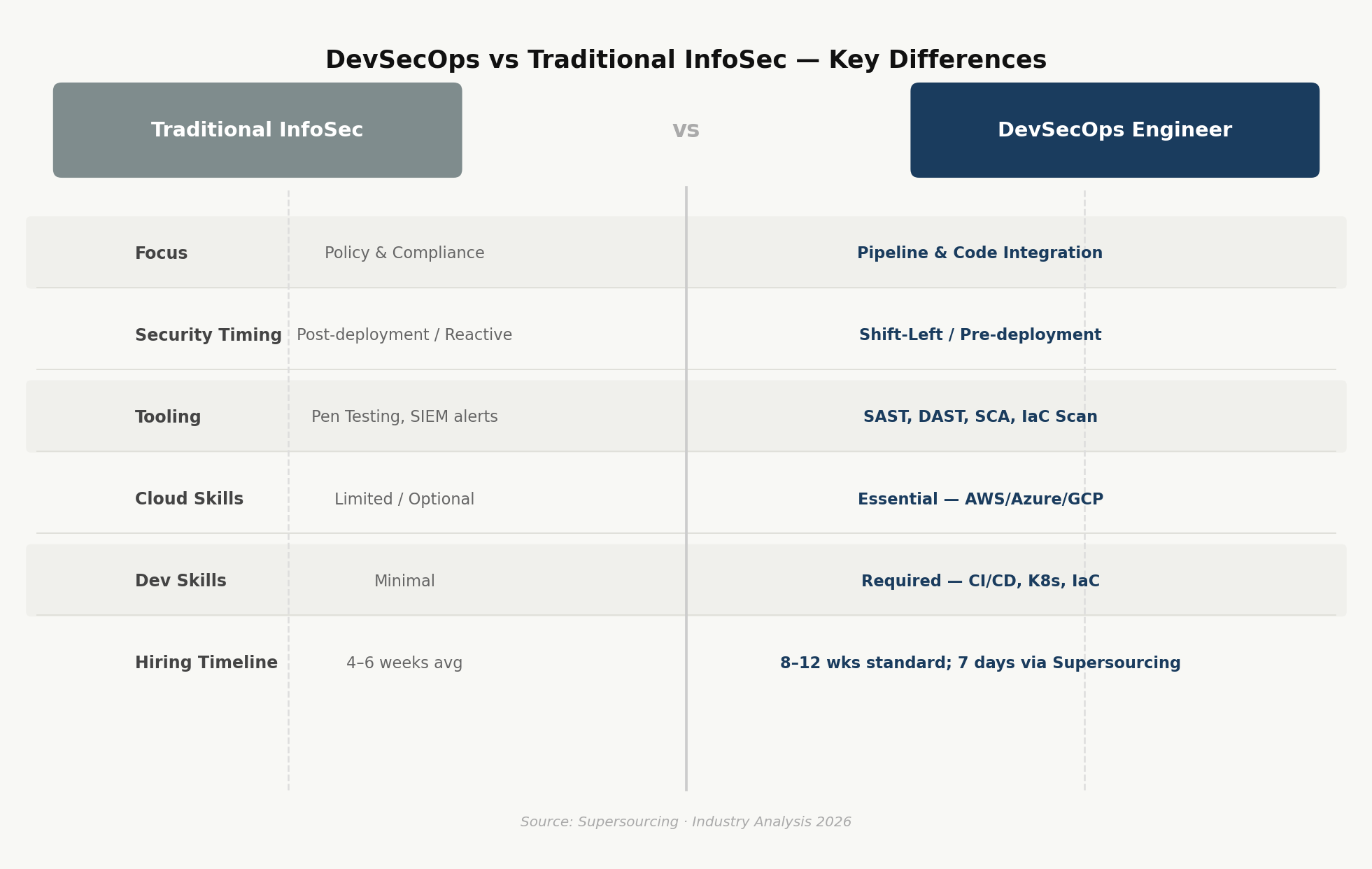
An InfoSec professional focuses on security policy, risk assessment, penetration testing, and compliance management. A DevSecOps engineer integrates security into the development pipeline SAST/DAST/SCA scanning in CI/CD, container and IaC security, cloud security posture management, and threat modelling in the design phase. DevSecOps requires genuine software engineering and infrastructure skills alongside security knowledge. The two are different roles that are frequently confused.
What security certifications are relevant for DevSecOps?
AWS Certified Security Specialty or Azure Security Engineer Associate for cloud security depth. Certified Kubernetes Security Specialist (CKS) for container security. GIAC Cloud Security Essentials (GCSE) for cloud-native security. CEH or OSCP for application security depth. DevSecOps-specific certifications from the DevSecOps Foundation are emerging. Certifications are a baseline combined with real pipeline integration and threat modelling scenario assessment.
How does DevSecOps differ from traditional DevOps for hiring?
DevOps focuses on CI/CD pipeline design, infrastructure as code, and deployment automation. DevSecOps adds security gates throughout that pipeline SAST in the build stage, DAST in the test stage, container scanning in the image build stage, IaC scanning in the infrastructure stage, and runtime security monitoring in production. The roles overlap significantly; many senior DevOps engineers have DevSecOps skills but the security tool knowledge, threat modelling methodology, and compliance framework awareness are the specific additions.
Can you place DevSecOps engineers with compliance framework experience for BFSI programs?
Yes. Compliance framework awareness PCI DSS for payment processing, SOC 2 for cloud IT services, ISO 27001, RBI cybersecurity framework for India-regulated programs is assessed for BFSI DevSecOps roles specifically. Tell us your regulatory context in the scoping call.
What is your replacement policy?
Free replacement within 14 days. No charge, no questions.
Do I need a legal entity in India?
No. We act as Employer of Record payroll, PF, ESIC, TDS, all statutory compliance handled by us.
What is the realistic hiring timeline for a senior DevSecOps engineer in India without Supersourcing?
8–12 weeks through standard job postings for a genuine DevSecOps engineer with pipeline integration depth and cloud security architecture skills. Through Supersourcing: 48-hour shortlist, hire within 7 days.
Talk to Us About Your DevSecOps Requirement
If you are building DevSecOps capability in India, a single security engineer to instrument your CI/CD pipeline, a security architect to design your cloud security posture, or a full DevSecOps team for a GCC security program I am usually the one on those calls.
Email: mayank@supersourcing.com Or book a meeting directly at supersourcing.com
Tell us your cloud platform, CI/CD toolchain, compliance requirements, and security maturity level. Shortlist in 48 hours from there.
No retainer until you hire. Replacement clause on every engagement.
Mayank Pratap Singh · Co-founder, Supersourcing Google AI Accelerator · LinkedIn Top 20 Startups India · 5,000+ Engineers Placed · 1,000+ Companies · 17 Fortune 500s
