

Boston has more robotics companies per capita than almost anywhere else in the world, yet teams here still take months to fill a single embedded systems role. That contradictory talent density next to talent scarcity is the entire story of robotics engineer hiring boston companies are living through right now, and most of them are solving it the wrong way.
The instinct is to post the job, widen the salary band, and wait. That approach worked in 2019. It does not work when every well-funded robotics startup within a five-mile radius of Kendall Square is fishing from the same small pool of ROS-fluent, firmware-literate engineers.
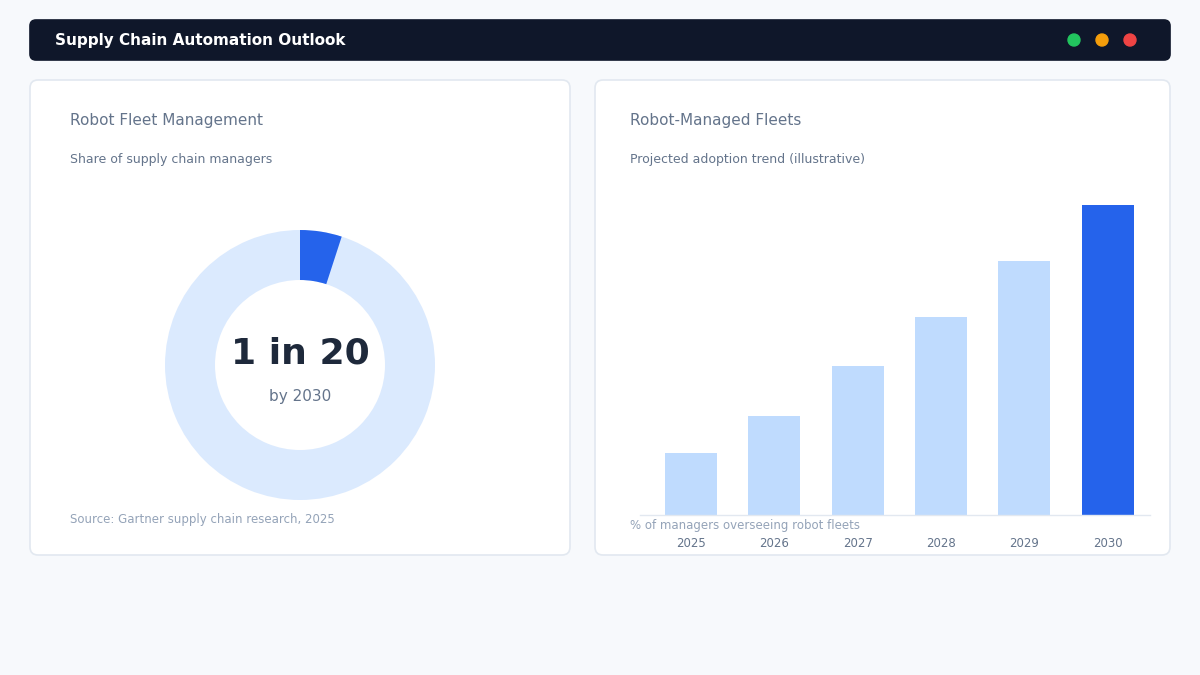
Gartner’s supply chain research puts a number on where this is headed: by 2030, one in 20 supply chain managers will be managing fleets of robots instead of people, a shift that is already pulling automation budgets and automation hiring forward by years. Every one of those robot fleets needs an engineer who can debug both the motor controller and the code running it.
This guide is written for engineering leaders, founders, and HR partners trying to close embedded engineers Massachusetts roles without burning three months and a recruiting budget on a search that goes nowhere. It covers what the market actually looks like, where teams lose candidates, and how to structure a search that gets to an interview-ready shortlist in days, not quarters.
TL;DR
This guide breaks down how to approach robotics engineer hiring boston in 2026 who's competing for the same candidates, what the role actually costs, and how to structure a search that doesn't stall at week six. It's written for engineering managers, technical founders, and HR leads staffing hardware-software teams anywhere along the Boston-Cambridge-Waltham corridor.
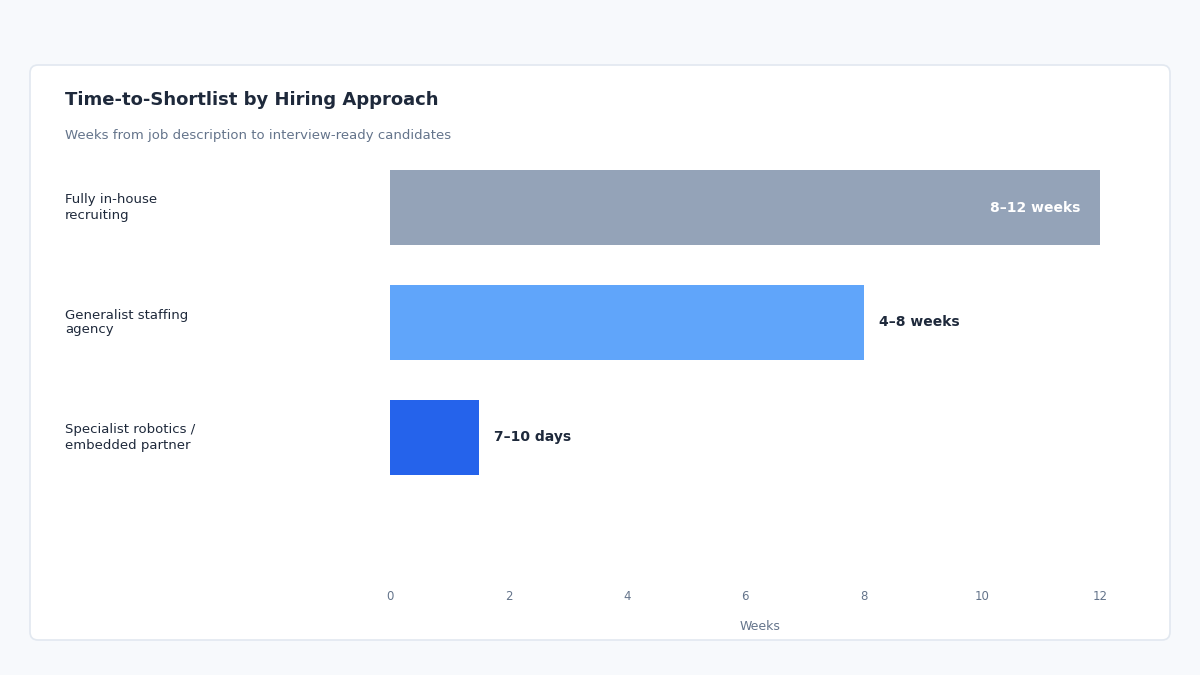
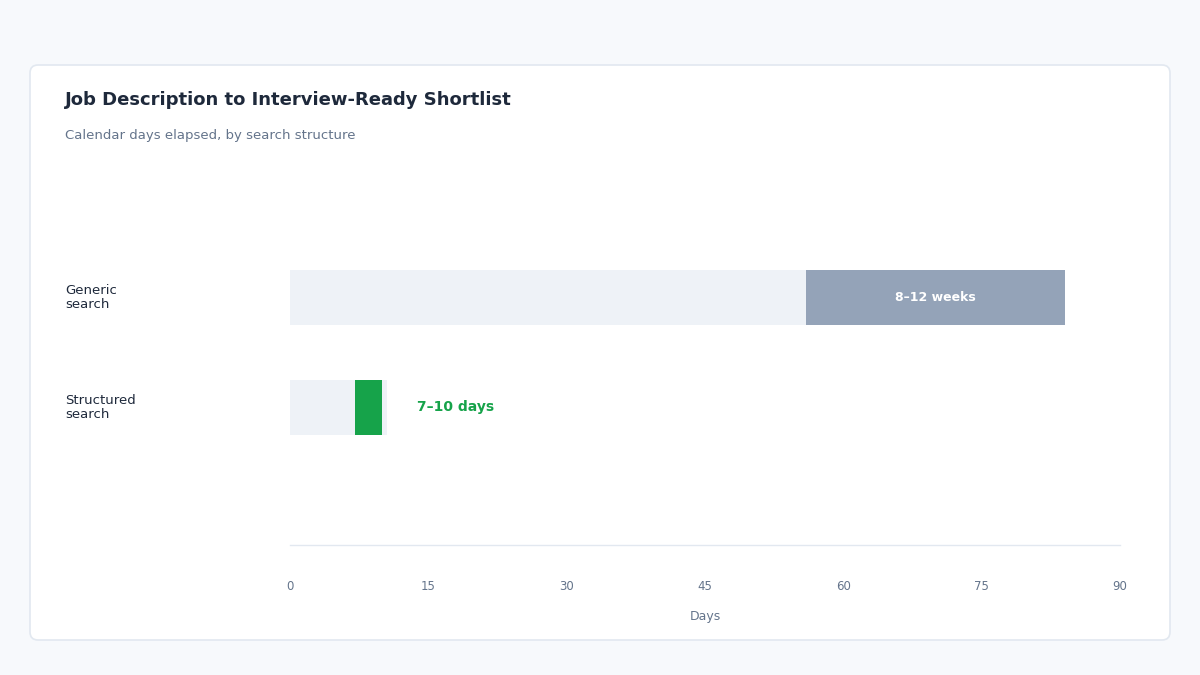
The single biggest number to remember: a properly structured search for a senior embedded or robotics talent Boston hire should move from job description to interview-ready shortlist in 7–10 working days. Most in-house searches take 8–12 weeks instead, mostly because of vague job descriptions and screening processes built for generalist software roles, not hybrid hardware-software ones.
By the end, you'll be able to write a job description that actually filters for the right skills, budget a realistic offer, decide whether to build the search in-house or bring in outside help, and spot the mistakes that quietly stall most robotics searches in this market.
What Is Robotics Engineer Hiring in Boston?
Robotics engineer hiring Boston refers to the process of sourcing, screening, and closing engineers who build the hardware-software systems behind autonomous vehicles, warehouse robots, medical devices, and industrial automation, drawing from the Greater Boston corridor’s dense cluster of robotics startups, research labs, and manufacturers. It typically covers roles spanning firmware, ROS/ROS2, controls, perception, and mechatronics.
The Core Problem: Everyone Is Fishing From the Same Pond
Massachusetts has one of the densest robotics ecosystems anywhere, and that density is exactly the problem. Most hiring managers underestimate the competition by 3–4x because they’re only tracking the two or three “famous” robotics names in their sector, not the full field of companies bidding for the same skill set.
Any serious attempt at robotics engineer hiring dedicated development teams run in 2026 has to start by acknowledging this density problem directly, rather than treating it as background noise.
The result: a hardware software engineer’s search that reads like a standard software req gets ignored by the exact candidates who could actually do the job, because it signals the hiring team doesn’t understand what the role really requires.
How to Structure a Robotics and Embedded Hiring Process That Actually Closes
This is where most in-house searches go wrong not in sourcing volume, but in process design. A robotics engineer hiring boston search built like a generic tech req will surface generic tech candidates.
Here’s the process that consistently works across hardware-software teams, and it’s the same six-step sequence behind every robotics engineer hiring boston search we’ve seen close in under two weeks.
1. Write the job description around systems, not job titles
Skip “Robotics Engineer” as a catch-all label. Specify the actual stack: ROS1 vs. ROS2, the RTOS in use (FreeRTOS, VxWorks, QNX), the microcontroller family, and whether the role touches perception, motion planning, or low-level drivers. Precision here is what separates a real applicant from a resume-keyword match.
2. Screen for hardware-software fluency, not just code quality
A candidate who can write clean Python but has never debugged a timing issue on real hardware will struggle in production. Build a technical screen that includes at least one question rooted in physical constraints, power budgets, latency tolerances, sensor noise, not just algorithmic puzzles.
3. Benchmark compensation against the full corridor, not just your sector
Salary data for embedded roles moved only modestly year over year, but total comp packages at well-funded robotics startups in Cambridge and Waltham routinely include equity and sign-on structures that a lean industrial-automation budget can’t match without adjusting the offer architecture.
4. Compress the screening-to-offer window
The single highest-leverage fix: cut the number of interview rounds. Hardware-software engineers are typically fielding 3–4 concurrent processes; a search that takes six weeks to reach an offer loses candidates to whoever moves faster, even with a lower headline number.
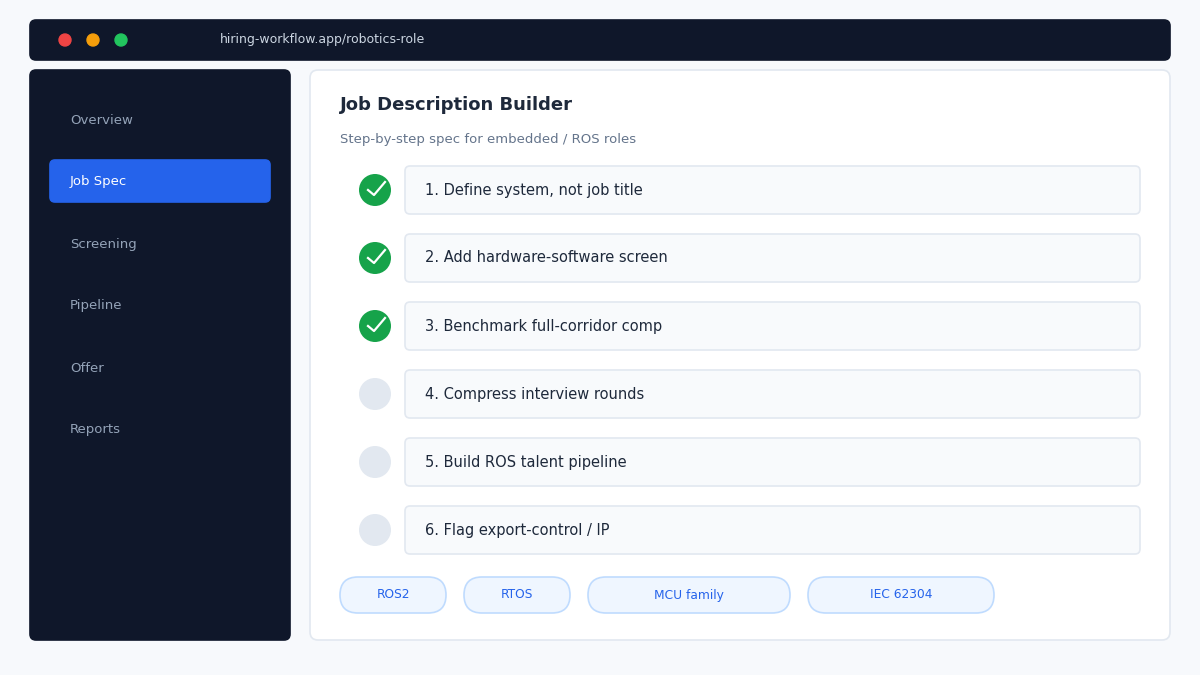
5. Build a ros developers hiring pipeline before you need it
Don’t start sourcing the week a role opens. Maintaining a warm bench of ROS-fluent engineers sourced from robotics meetups, MIT and Northeastern alumni networks, and open-source contributors to Gazebo, MoveIt, or Nav2 this is what lets a search compress from months to days.
Robotics teams that get this right rarely staff the effort with generalist software recruiters alone. Many pair internal engineering leadership with specialists who hire machine learning engineers and perception-stack talent full time, since a robotics req increasingly overlaps with ML hiring for vision and sensor-fusion work. Others lean on partners who hire Python developers for the tooling and simulation layer that surrounds the embedded core, since most ROS stacks still run substantial Python tooling even when the real-time path is C++.
6. Flag export-control and IP exposure before the offer stage, not after
A meaningful share of Boston-area robotics work touches defense, aerospace, or dual-use technology, which means ITAR or EAR considerations can affect who’s eligible for a given role.
Teams that only surface this during onboarding routinely lose an offer-accepted candidate in the final week screen for citizenship or work-authorization constraints as part of the initial job description, not as a surprise after an offer is signed.
Cost and timeline reality
A senior embedded or robotics engineer search in the Boston corridor typically runs ₹15–25 lakhs equivalent in blended sourcing and recruiting cost when done in-house across salary premiums, agency fees, and lost engineering time on interviews, a number most budgets don’t account for until the second failed search.
A structured, AI-assisted sourcing process can bring a qualified shortlist together in 7–10 working days instead of the 8–12 weeks a generalist in-house search usually takes.
Case Studies: Closing Hard-to-Fill Roles in the Corridor
A Series B autonomous mobile robotics company in Waltham needed three ROS2-fluent perception engineers within a single quarter to hit a customer pilot deadline. A structured, stack-specific sourcing process built around the exact sensor suite and planning framework in use moved the team from job description to signed offers in under four weeks, against an internal estimate of three months.
A medical device manufacturer expanding its embedded firmware team in the Merrimack Valley had spent five months trying to fill two safety-critical firmware roles through generic job board postings. Restructuring the screen around IEC 62304 experience and RTOS-specific technical questions, rather than general embedded keywords, cut time-to-shortlist to roughly ten working days and produced candidates who passed technical review on the first round.
Building In-House vs. Bringing in a Specialist Partner
Not every robotics engineer hiring boston search needs outside help, but the decision should be made deliberately, not by default. The table below is a starting point for that call.
| Approach | Best for | Typical timeline | Main risk |
| Fully in-house recruiting | Companies with an existing robotics recruiting function and warm pipeline | 8–12 weeks per hire | Recruiter unfamiliar with hardware constraints screens out qualified candidates |
| Generalist staffing agency | One-off software hires, not hardware-specific roles | 4–8 weeks | Candidates lack real embedded/ROS depth; high early attrition |
| Specialist robotics/embedded RPO or staffing partner | Ongoing hiring across multiple embedded, firmware, or ROS roles | 7–10 working days to shortlist | Requires clear technical brief upfront to avoid mismatched submissions |
What Most Teams Get Wrong
The most common mistake isn’t sourcing, it’s the technical screen itself. Teams borrow a generic software interview loop and bolt on one “robotics question” at the end, which filters for confidence rather than actual hardware-software competence. The engineers who can genuinely debug a control loop under load rarely perform best in a whiteboard-algorithms format, and teams lose them to competitors running more realistic, systems-oriented interviews.
The second pattern: hiring managers assume Boston’s density of robotics companies means a large candidate pool. It’s the opposite. The same 500-plus company ecosystem that makes Massachusetts a robotics hub also means every strong ROS or firmware engineer already has three recruiters in their inbox before your req goes live. Speed and specificity beat salary alone in this market more often than hiring managers expect.
Where to Go From Here
If you’re actively working as a robotics engineer hiring boston search and it’s stalled past week six, the fix is usually in the job description or the screening process, not the offer.
Supersourcing has run AI-assisted sourcing across 527+ engagements, with a 98% candidate joining rate and a 7–10 day turnaround from job description to interview-ready shortlist, including for hardware-software and embedded roles across the Boston corridor.
If you want a second opinion on a search before committing more budget to it, reach out directly at mayank@engineerbabu.com, browse the service overview, or go straight to the contact page.
FAQ
What is the average salary range for a robotics engineer in Boston?
Compensation varies widely by seniority and specialization firmware and controls engineers, perception/ML-adjacent robotics engineers, and generalist ROS developers all sit in different bands, and total comp at funded startups often includes meaningful equity. Benchmarking against the full corridor, not just one sub-sector, gives a more accurate range than any single national salary survey.
Why is it so hard to hire embedded engineers in Massachusetts right now?
The state’s dense robotics ecosystem means demand is concentrated in a small geographic radius, while the skill set itself real-time systems plus hardware fundamentals plus software engineering narrows the qualified pool far more than a typical backend or frontend role.
How long should a robotics engineer search realistically take?
A well-structured process, run either in-house with a dedicated technical recruiter or through a specialist partner, should reach an interview-ready shortlist in 7–10 working days. Searches that stretch past six to eight weeks usually have a job description or screening problem, not a market problem.
Should we hire ROS developers directly or bring in specialized hardware talent through a staffing partner?
It depends on the hiring volume. A single hire can often be handled in-house if the team already has robotics domain knowledge. Recurring or multiple simultaneous embedded/ROS hires usually benefit from a partner who already maintains a warm, vetted pipeline in this niche.
What skills should a strong robotics or embedded candidate have beyond coding?
Look for comfort with hardware constraints, power budgets, latency, sensor noise, real-time scheduling plus the ability to debug across the hardware-software boundary, not just within a single codebase.
Is Massachusetts still a good place to build a robotics or embedded team in 2026?
Yes, for access to talent density, research institutions, and an established investor base but that same density raises competitive pressure on any single search, which is exactly why process speed and specificity matter more here than in a less concentrated market.
