

Enterprises that rush into hiring a Kore.ai developer without a structured evaluation process typically spend 3–4 months recovering from it reworking dialog flows, re-mapping integrations, or rebuilding NLP models that were never properly trained in the first place. The platform is powerful. The talent pool is uneven. That gap is where most enterprise deployments go wrong.
If you are an IT head at a BFSI, telecom, or healthcare enterprise evaluating a conversational AI platform developer India-side, this guide will tell you exactly what to look for, what to pay, and what to avoid.
Hire Kore.ai developer India is where many organizations misstep. The platform is powerful, but inconsistent talent quality leads to poorly designed dialog flows, weak integrations, and undertrained NLP models resulting in costly rework and delayed deployments.
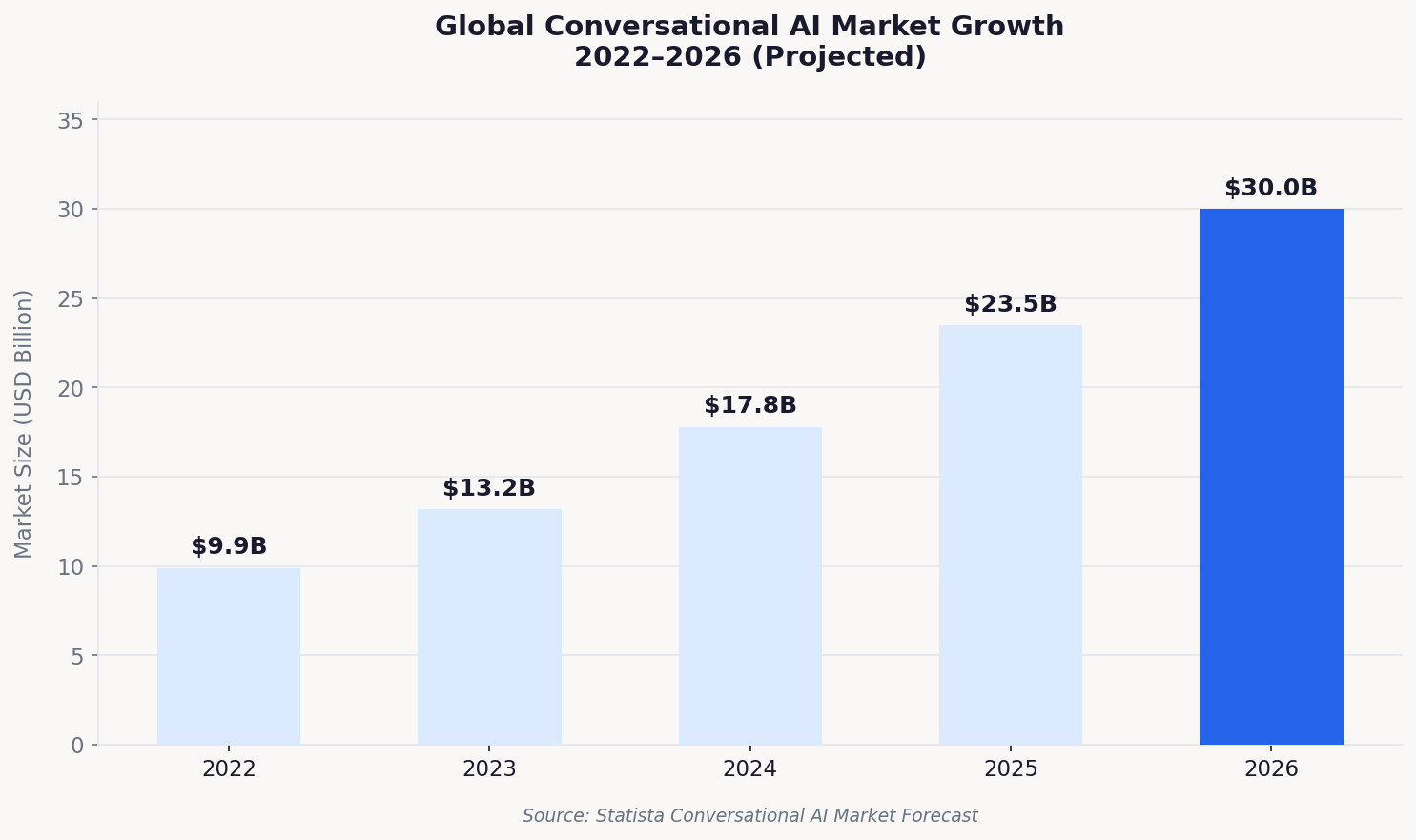
The market urgency is clear. According to Statista conversational AI market forecast, the global conversational AI market is expected to surpass $30 billion by 2026, driven by enterprise adoption across BFSI, telecom, and healthcare.
The takeaway is simple: success with Kore.ai isn’t about hiring quickly, it’s about hiring developers who understand how to build scalable, production-ready conversational systems.
TL;DR: What You Need to Know Before You Hire a Kore.ai Developer
Kore.ai is not a plug-and-play tool. It rewards platform depth and punishes shallow hiring.
Most enterprises shortlist the wrong developers because they screen for generic coding skills instead of XO Platform proficiency, NLP configuration experience, and enterprise integration fluency. The result: rework, delays, and deployments that underperform.
This guide covers exactly what Kore.ai developer skills to verify, what certified talent actually costs in India, which hiring model fits your deployment scale, and the mistakes that consistently derail BFSI, telecom, and healthcare implementations before you commit a rupee.
What Is Kore.ai?
Kore.ai is an enterprise-grade conversational AI platform built on its proprietary XO Platform, enabling organizations to design, build, deploy, and manage AI-powered virtual assistants across voice, chat, and digital channels without requiring custom AI model development from the ground up.
It differs from generic chatbot builders by offering pre-built industry accelerators, native NLP engines, dialog management, and enterprise system integrations out of the box.
Why Enterprises Are Getting the Hiring Decision Wrong
Most IT procurement teams treat a hire Kore.ai developer India search the same way they’d staff any developer role filter by years of experience, run a technical screen, and close the offer. That approach fails here for three specific reasons.
- First, Kore.ai expertise is platform-depth, not language-depth. A developer with five years of Node js experience but six months on Kore.ai’s XO Platform will consistently underperform a developer with two years of dedicated platform work. The platform’s architecture, particularly around intent modeling, entity extraction, and multi-turn dialog management, requires hands-on pattern recognition that doesn’t transfer from adjacent skills.
- Second, enterprise deployments in BFSI and healthcare carry compliance and data residency requirements that a generalist hire chatbot developer India search will almost never surface by default. You need developers who understand PCI-DSS channel constraints, HIPAA-adjacent data handling, or RBI’s digital communication guidelines depending on your sector.
- Third, most Indian vendor pools mix certified and non-certified developers under the same job titles. There is no standard industry signal. Enterprises end up paying ₹12–20 lakhs per annum for someone whose hands-on Kore.ai scope extends to a single FAQ bot in a previous role.
Kore.ai Developer Skills: What the Role Actually Requires
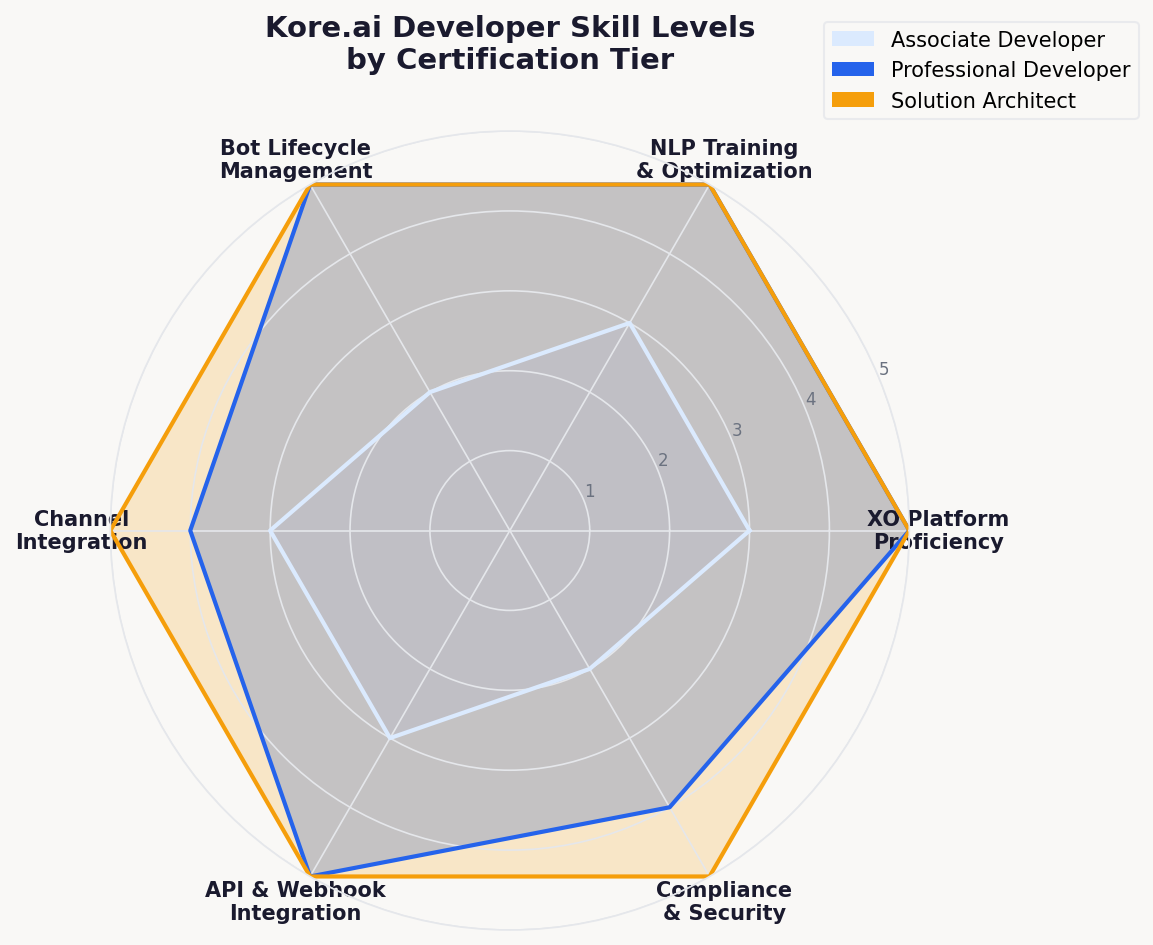
When you hire Kore.ai developer India, the role is not a single profile; it typically spans two distinct competency levels, and conflating them is a budget and timeline risk.
Core Platform Skills Every Kore.ai Developer Must Have
- XO Platform proficiency: Dialog task design, small talk configuration, knowledge graph setup, and entity management
- NLP training and optimization: Intent classification, utterance expansion, ML vs. FM model selection per use case
- Bot lifecycle management: Environment promotion (dev → UAT → production), version control, and rollback procedures
- Channel integration: Web SDK, voice gateway (IVR), WhatsApp Business API, Microsoft Teams depending on deployment scope
- API and webhook integration: REST/SOAP service node configuration, authentication flows, error handling patterns
Senior-Level or Architect-Level Additions
For enterprises deploying Kore.ai enterprise integration across core banking systems, CRMs, or EHRs, you need at minimum one resource who understands:
- Event-driven bot triggers and callback architectures
- Custom NLP model fine-tuning within the XO Platform
- Role-based access control and audit logging for regulated industries
- Omnichannel bot deployment consistency ensuring dialog parity across voice, chat, and async channels
A structured evaluation should test these areas with scenario-based tasks, not MCQs. Ask candidates to walk through how they’d handle a mid-conversation context switch in a banking KYC flow. The answer reveals far more than a certification alone.
Certifications Worth Verifying
Kore.ai offers its own certification program through its developer portal. Verified certifications include:
- Kore.ai Certified Developer (Associate)
- Kore.ai Certified Developer (Professional)
- XO Platform Solution Architect Certification
Always verify directly via the Kore.ai partner or certification portal. Third-party certificates claiming Kore.ai expertise without these specific designations carry no platform-backed validation.
Real-World Application: What Enterprises Have Achieved
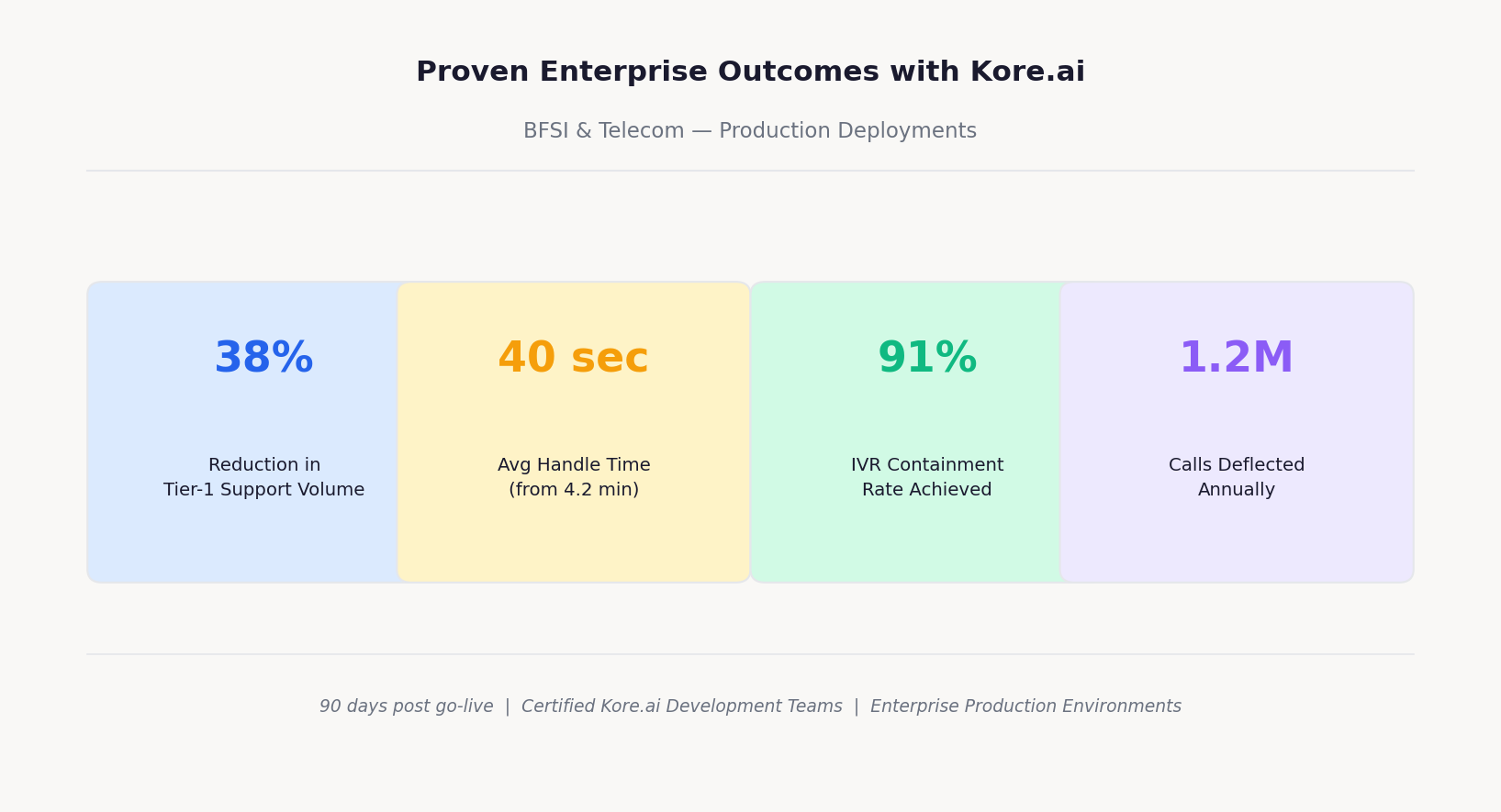
BFSI Regional Private Bank (India): A mid-sized bank deployed a Kore.ai-powered virtual assistant development solution across its net banking helpdesk. Using a dedicated team of two certified Kore.ai developers and one integration specialist, the bank reduced Tier-1 support volume by 38% within 90 days of go-live. Average handle time dropped from 4.2 minutes to under 40 seconds for routine queries.
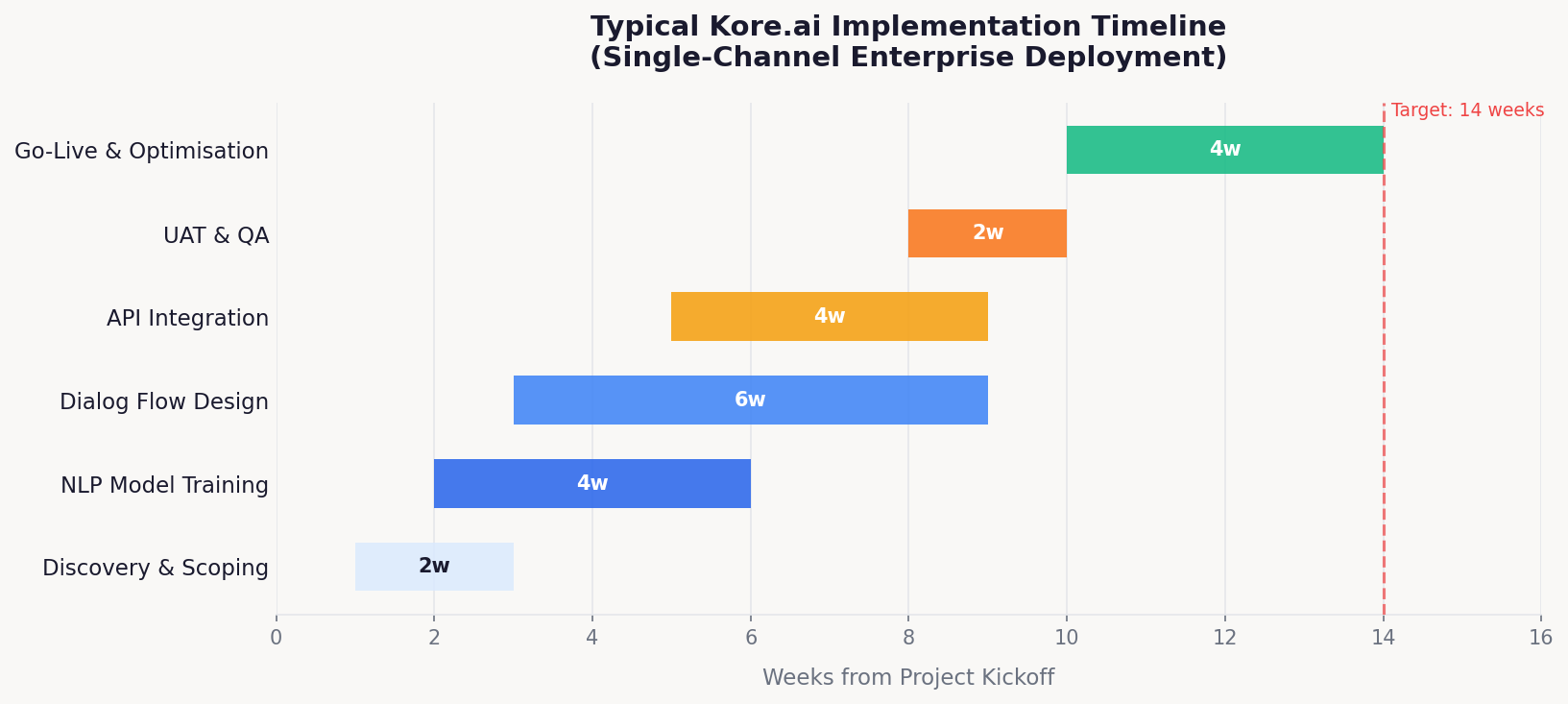
Telecom National ISP: A telecom provider integrated voice bot development using Kore.ai’s voice gateway across its IVR layer. The project required specific expertise in telephony channel constraints and dialog flow design for low-bandwidth environments. Delivered in 14 weeks by a 3-member Kore.ai team, it deflected 1.2 million calls annually with a 91% containment rate.
These outcomes are reproducible but only when the developers assigned to the project have genuine platform depth, not lateral exposure.
Comparison: Hiring Models for Kore.ai Talent
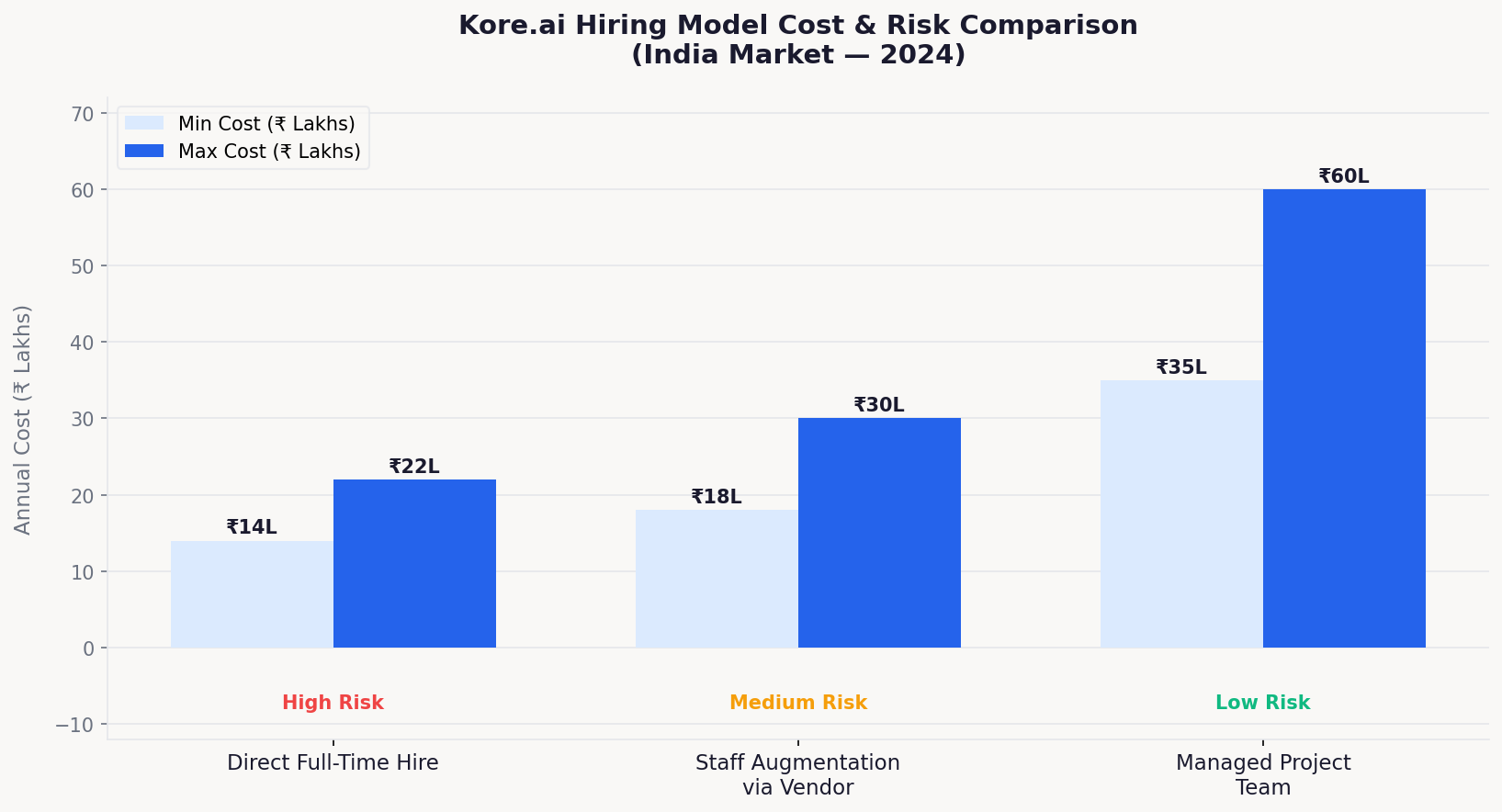
Enterprises evaluating how to hire Kore.ai developers in India typically choose between three models. Each carries distinct trade-offs.
| Hiring Model | Typical Cost (Annual) | Time to Productive | Risk Factor |
| Direct Full-Time Hire | ₹14–22 lakhs/developer | 3–6 months | High talent verification is on you |
| Staff Augmentation via Vendor | ₹18–30 lakhs/developer | 2–4 weeks | Medium vendor quality varies widely |
| Managed Project Team (Outcomes-based) | ₹35–60 lakhs/project | Immediate | Low accountability is contractual |
For enterprises with a one-time deployment and no internal bot ops team planned, a managed project engagement almost always delivers better conversational AI ROI than building an internal team from scratch. For enterprises planning multi-bot or multi-channel programs over 18–36 months, building a 3–5 person internal Kore.ai center of excellence makes economic sense.
What Most Teams Get Wrong When They Hire Kore.ai Developer India
The single most consistent mistake: scoping the developer role around the first bot, not the program.
Enterprises deploy one FAQ bot, declare success, then realize three months later they need to extend it to voice, add a second use case, and integrate it with a new CRM. The developer they hired was optimized for a static knowledge graph deployment not bot lifecycle management across a growing enterprise AI assistant portfolio.
The second mistake is treating Kore.ai’s low-code interface as a signal that “any developer can do this.” The interface abstracts complexity. It does not eliminate it. XO Platform customization at scale especially for BFSI use cases with compliance-driven dialog branching requires developers who have built and broken things on the platform multiple times.
Hire for the 18-month program. Not the first sprint.
FAQ: Hiring a Kore.ai Developer in India
What does a Kore.ai developer actually do?
A Kore.ai developer designs and builds AI-powered virtual assistants using the XO Platform. Their work spans dialog flow architecture, NLP model training, system integration via APIs, channel deployment, and post-launch optimization. The role is equal parts platform configuration and enterprise systems thinking.
How much does it cost to hire a Kore.ai developer India-side?
Fully loaded annual cost for a certified mid-level Kore.ai developer in India ranges from ₹14–22 lakhs in-house, or ₹18–30 lakhs through staff augmentation. Project-based engagements for a defined deployment scope typically run ₹35–60 lakhs depending on complexity and integration depth.
What skills does a Kore.ai developer need for BFSI deployments?
Beyond core Kore.ai developer skills XO Platform, NLP, API integration BFSI deployments require familiarity with PCI-DSS channel compliance, audit trail configuration, and role-based access controls. Experience with core banking API structures (Finacle, Temenos, or similar) is a significant advantage.
Is Kore.ai better than building a chatbot from scratch?
For enterprises in regulated industries with multi-channel requirements and timelines under 6 months, Kore.ai’s pre-built enterprise accelerators deliver faster time-to-value than custom development. Custom builds offer more flexibility but typically require 2–3x the development effort and carry higher maintenance overhead.
How long does a Kore.ai implementation take?
A single-channel, single-use-case deployment by an experienced team typically takes 8–14 weeks. Multi-channel, multi-persona deployments with deep ERP or CRM integration can run 20–32 weeks. Teams that underestimate integration complexity account for the majority of overruns.
What certifications should I verify when I hire Kore.ai developer India-side?
Request verification of Kore.ai’s own certification track: Associate Developer, Professional Developer, or Solution Architect certifications issued through the official Kore.ai developer program. These are the only platform-backed credentials. General AI or chatbot certifications from third-party platforms do not validate XO Platform competency.
How do I evaluate a Kore.ai developer before hiring?
Structure the evaluation around a scenario task: give candidates a business use case (e.g., a collections bot for a bank) and ask them to sketch the dialog task architecture, identify integration points, and flag compliance considerations. This reveals platform thinking, not just tool familiarity. Supplement with a reference check from a prior enterprise client, not just a project portfolio.
Before You Commit to a Vendor or Hire
If you are at the stage of shortlisting resources or vendors to hire Kore.ai developer India, the most expensive thing you can do is move fast without a structured evaluation framework. Platform depth, compliance fit, and program-level thinking cannot be verified through a standard tech screen. By the time the gaps surface, you are already three sprints in and the cost of course-correction is real.
The enterprises that get this right share one habit: they evaluate before they engage. They test for XO Platform depth, not just development experience. They ask compliance-specific scenario questions before signing a SOW. They define the 18-month program scope before hiring for the first sprint.
Our team has delivered Kore.ai-based virtual assistant programs across BFSI, telecom, and healthcare enterprises. We have seen what well-structured hiring looks like and what under-evaluated deployments cost in recovery time and rework. Our pre-engagement assessment process is built specifically to help IT heads pressure-test a deployment plan, validate developer capability, and identify integration risks before committing budget.
If you are evaluating deployment scope, comparing hiring models, or simply want a second opinion on a vendor shortlist this is exactly the kind of decision our team engages in early. A 30-minute scoping call can save 3 months of the wrong execution.
Reach out to our team at mayank@engineerbabu.com, visit Supersourcing to start the conversation, or simply fill out our contact form and we will respond within one business day.
The right hire changes the outcome. The wrong one resets the clock.
